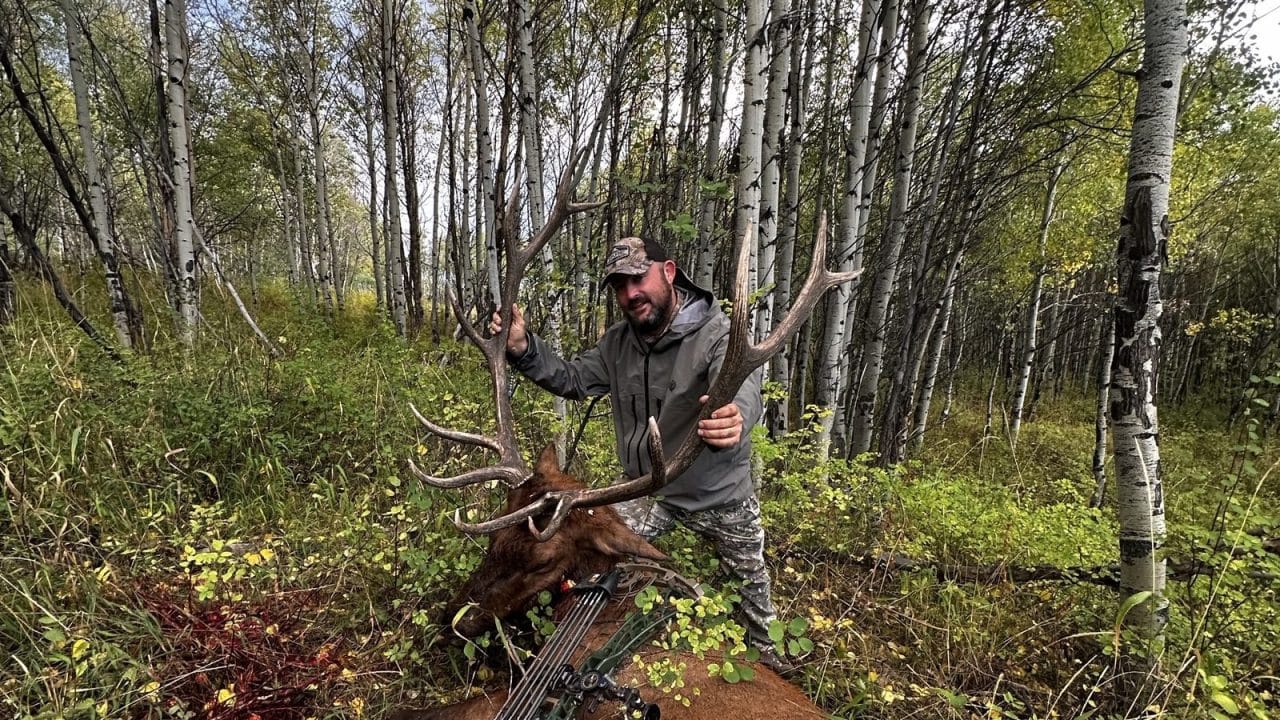
Every September somebody tells me mechanical broadheads for elk are unethical, and every September my cofounder Moose kills a bull with one. Both of those things keep being true, which should tell you the argument is broken. I’ve guided Colorado’s Rockies for seven years, 50-plus days a season, and I’ve watched elk die fast behind expandables and I’ve watched elk walk off carrying them. I’ve also had a mechanical fail on me personally at full draw.
So no, I’m not here to tell you to throw your expandables out. If you shoot mechanical broadheads for elk, you should know exactly where your setup runs out of road — and if you shoot fixed, you should stop pretending your head does something magic that placement doesn’t.
Do Mechanical Broadheads Work On Elk?
Yes. Next question.
The honest version: yes, within a window. Mechanicals trade penetration for cutting diameter. Those blades cost energy to open, and a wider cut drags more through tissue. On a 700-pound animal that trade matters more than it does on a whitetail, because you’ve got more hide, more muscle, and more bone between the arrow and the far side.
Inside that window — good angle, ribs, adequate arrow — a mechanical is arguably the better tool. It cuts more, it bleeds better, and as I laid out in my piece on wounded elk, blood on the ground is what actually decides whether you find the animal.
Moose’s Bulls: The Case For Mechanicals
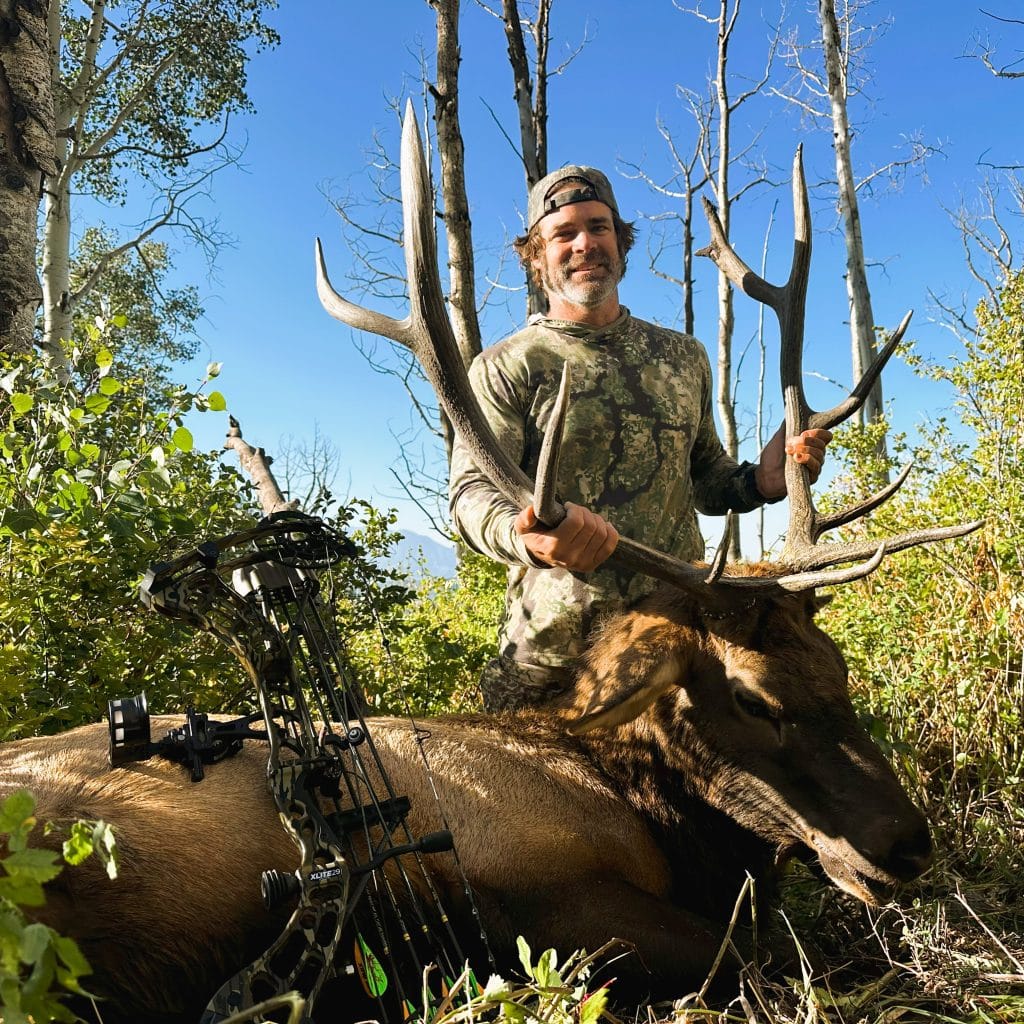
Moose has shot mechanicals for most of his career and has the elk to show for it. In 2024 he killed his bull with a G5 MegaMeat — 2-inch cut, three blades, rear-deploying — and had a short blood trail and an easy recovery. Last season he ran the Evolution Hyde and killed his bull with a 472-grain arrow at 70 pounds.
That last number is the interesting part. The fixed-blade camp will tell you a 472-grain arrow at 70 pounds has no business pushing a 2-inch head through a bull. Moose keeps doing it anyway. And the Hyde isn’t a pure mechanical — it’s a hybrid, with a 3/4-inch fixed leading blade ahead of the 2-inch expandable, so it opens a hole before the mechanical blades ever deploy. That’s a real engineering answer to a real objection.
He’s going back to the MegaMeat for 2026, mostly for the blade retention. Which brings us to the part the mechanical crowd doesn’t like to discuss.
Where Mechanicals Actually Fail
Moose has had early deployment. He solved it by moving to crossbow-spec blade retention — heavier collars built for higher speeds — and it’s been fine since. That’s a fix, but it’s a fix for a problem fixed blades don’t have.
Mine was worse. Cold morning, and the rubber band retaining my blades froze and snapped. I came to full draw and looked down at one blade already deployed. That’s not a hypothetical failure mode you read about on a forum. That’s a moving part failing on the coldest morning of the year, which is exactly when elk hunting happens.
And here’s the number I keep coming back to: across the hunters I’ve guided, I’ve lost more elk behind mechanicals than behind fixed blades. Not because mechanicals don’t kill. Because the shots that go sideways — steep quartering angles, a step at the shot, a shoulder — don’t get through bone the way a fixed head does. The mechanical punishes the mistake instead of absorbing it.
Fixed Blades And Elk Shoulder Bone
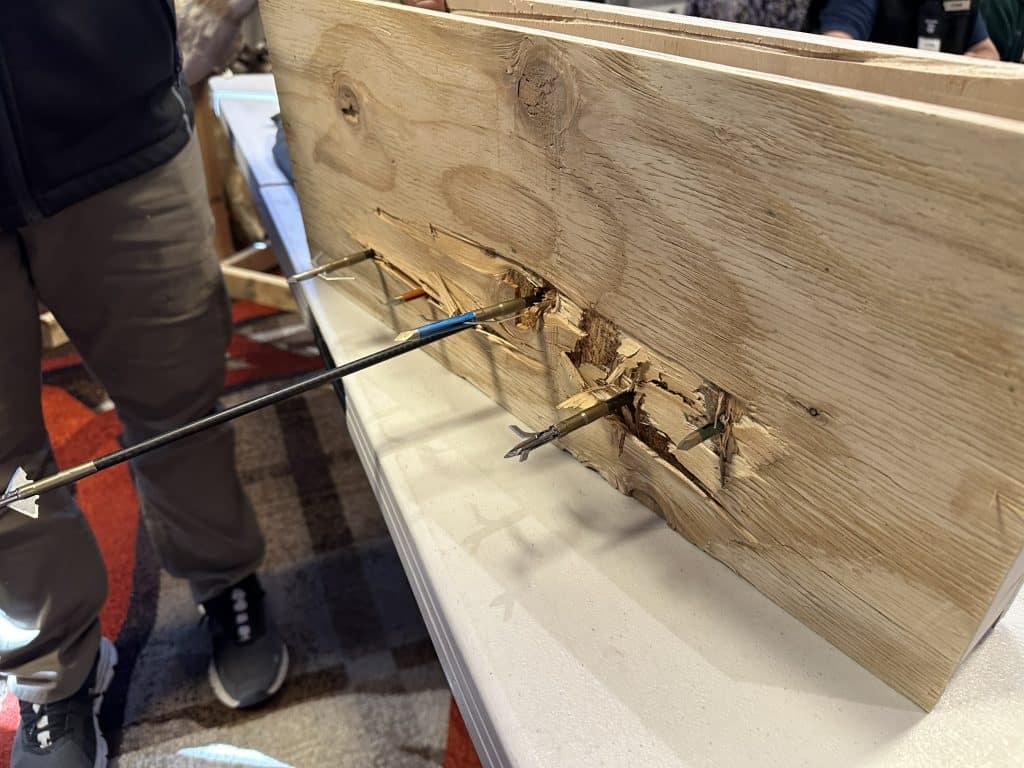
Fixed blades are better if you hit bone. Period. I’m not going to dress that up.
An elk scapula is not a whitetail scapula. A solid fixed head — especially a compact two-blade or a stout three-blade with a thick ferrule — has a real chance of splitting it and reaching something that matters. A wide mechanical hitting that same bone is trying to open blades against a wall while the arrow is already losing energy. Sometimes it works. Often it doesn’t.

The industry knows this. Even manufacturers with a stake in the fixed-blade side frame it as a pass-through argument, and pass-throughs are what put blood on the ground. Physics doesn’t care which brand you’re loyal to: more cutting surface means more resistance, and more resistance means less penetration.
The Real Argument Nobody Makes Correctly
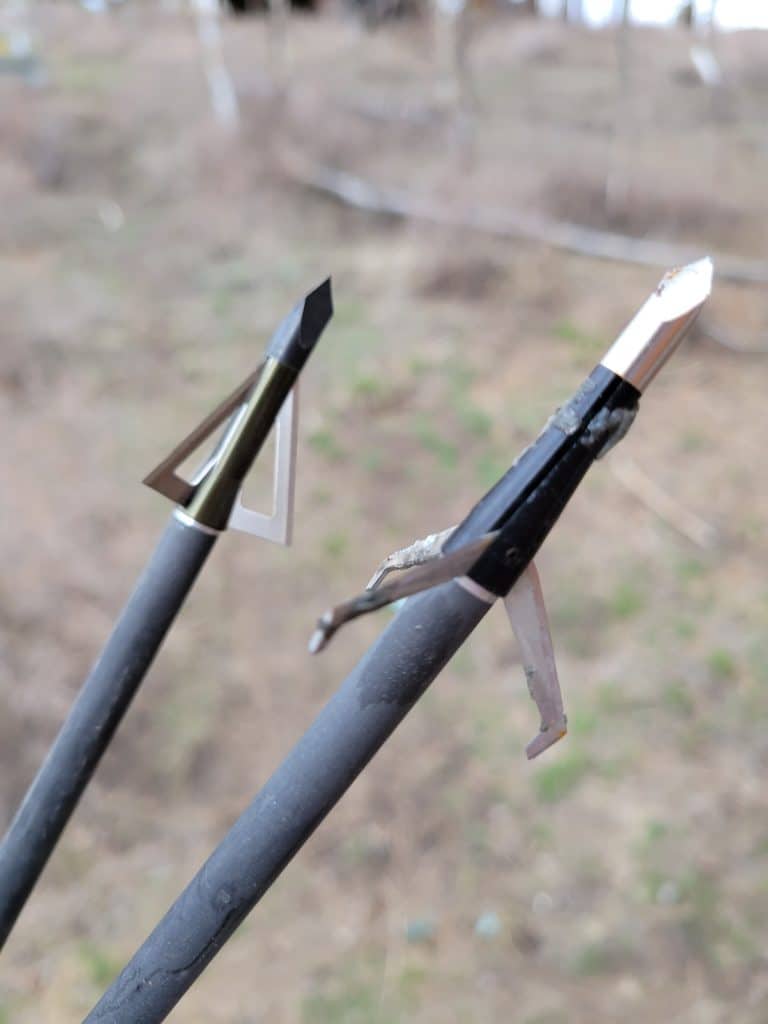
Both camps lead with their worst material, so let me clean it up.
The fixed-blade guy says: mechanicals don’t pass through and the blades break. Half right. They pass through less often, and you need that exit hole to find the animal. But he says it like it’s a universal law instead of a probability, and he ignores that his 1-inch cut can slip between vitals and leave a bull walking with a hole in nothing important.
The mechanical guy says: fixed heads cut a smaller wound channel and don’t destroy vitals as reliably. Also half right. A 2-inch cut inside the chest cavity does violence a 1-inch head can’t match. But he says it like penetration is solved, and it isn’t — his whole argument collapses the moment the arrow doesn’t get where it needs to be.
What’s actually going on: one camp optimizes for the shot going right, the other optimizes for the shot going wrong. Both are rational. Neither is a moral position, and anybody arguing it as one is telling on themselves.
What I Put A First-Timer Behind
Whatever I’m shooting. That’s not a dodge — it’s the whole philosophy.
If a client shows up and I can’t personally vouch for what’s on the end of his arrow, I’ve got no read on what happens when it hits bone at a bad angle. I’d rather have one setup in camp I know cold than six I’m guessing about. So the answer for a first-timer is a stout fixed head, because the first-timer is statistically the guy most likely to make the shot that requires forgiveness.
Everything else has to be right first anyway. Confirm your setup clears your state’s minimum draw weight for elk — and understand that minimums are floors, not targets. Check your regs while you’re at it, because a handful of states restrict mechanical or swept-blade designs outright.
Mechanical Broadheads We Actually Trust For Elk
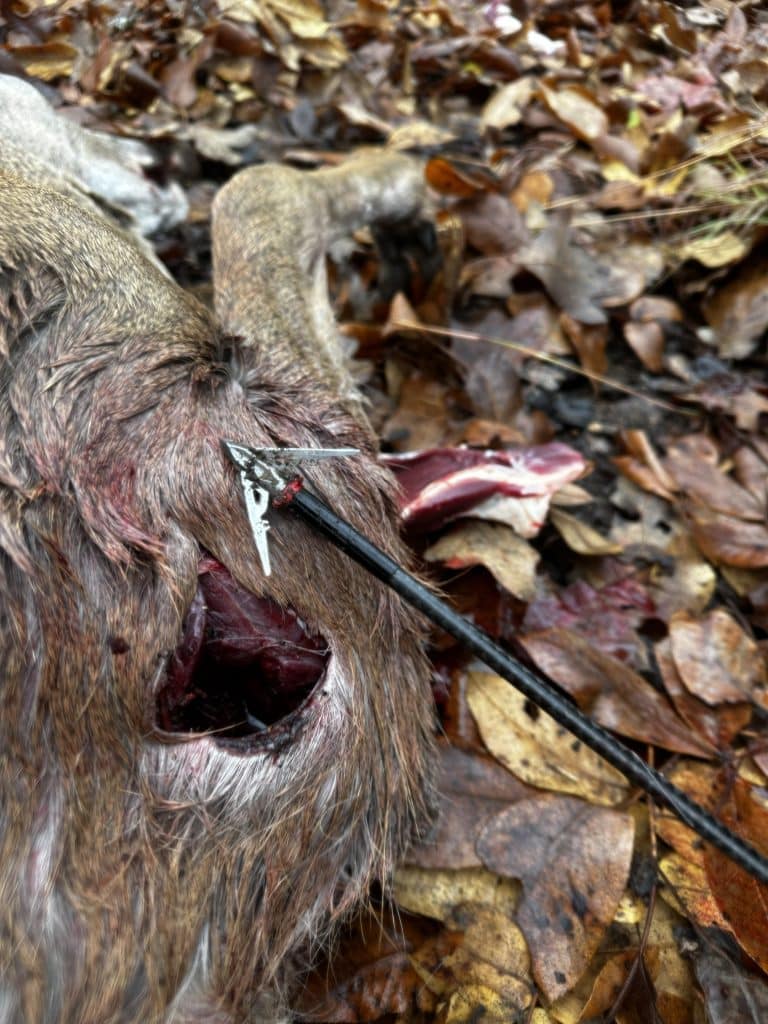
Not an elk, but this wound on a white tail shows you how much a G5 Megameat can really open an animal up.
If you’re running expandables anyway, run one built for this. We’ve had good field results from the G5 MegaMeat, the Evolution Hyde, the Rage Hypodermic, and Grim Reaper heads. The common thread on the ones that hold up: real blade retention, a chisel or fixed leading edge, and a ferrule that doesn’t fold.
Full breakdown of the fixed side, and where each head fits, is in our best broadheads for elk guide. If you’re restocking before September, our broadheads and archery gear are in stock now.
Frequently Asked Questions
Are mechanical broadheads legal for elk?
In most western states, yes — but a few restrict expandable or swept-blade designs, and some set minimum cutting diameters. Check the current regulations for the state you’re hunting before you buy. Rules change more often than people check.
What arrow weight do you need for mechanicals on elk?
More than you need for fixed. Mechanicals spend energy opening, so you want mass and momentum behind them. Moose runs 472 grains at 70 pounds successfully, and I’d treat that as a floor rather than a target for a 2-inch head.
What’s the best mechanical broadhead for elk?
The G5 MegaMeat is the one we trust most, largely for its SnapLock collar and blade retention. The Evolution Hyde is worth a hard look too, since the fixed leading blade addresses the penetration objection directly instead of ignoring it.
Will a mechanical broadhead go through an elk shoulder?
Sometimes. Not reliably. If your shot selection includes angles where shoulder contact is likely, shoot a fixed blade. That’s the entire honest answer.
Alright, Come Swing
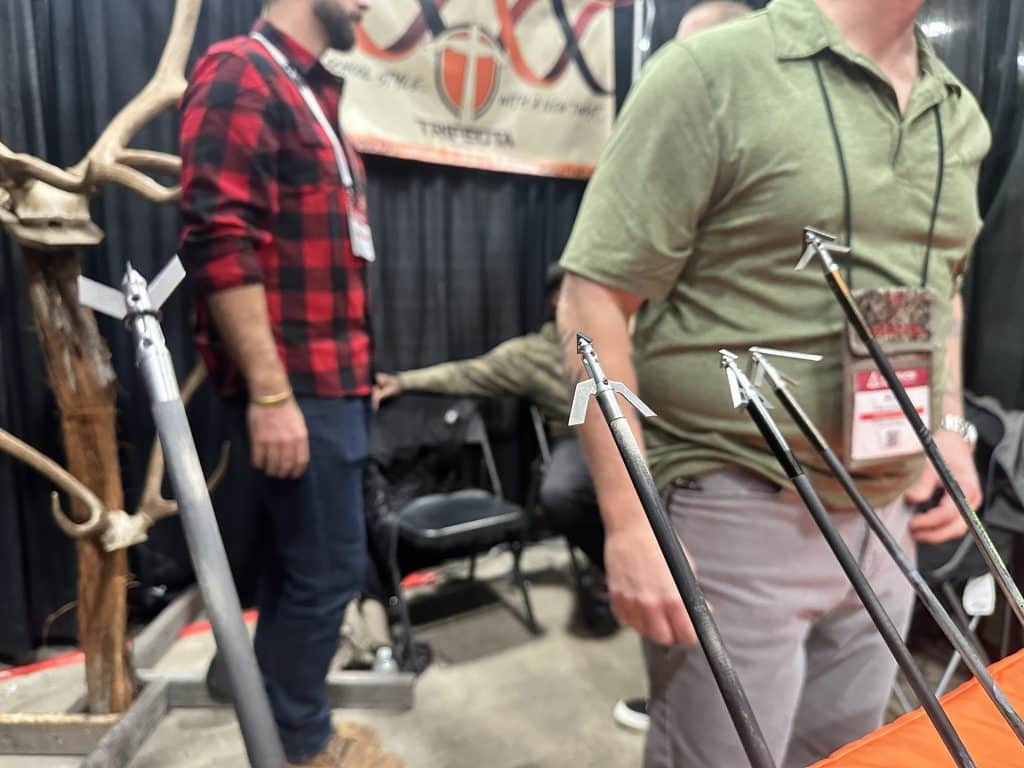
My position on mechanical broadheads for elk is that they kill elk and they’re not a sin — and that fixed blades still forgive more when the shot goes bad. I don’t think those two statements fight each other. Plenty of you will.
So pick one and defend it:
- Have you actually lost an elk to a mechanical failure — blades that didn’t open, snapped, or deployed early? What head?
- Is “fixed blades are better on bone” a real advantage, or an excuse for shots nobody should be taking?
- Moose kills bulls with a 2-inch head at 472 grains. Is that proof mechanicals work, or is he just getting away with it?
Comments are open, and the Final Stalk forum is where it can turn into a real argument. Tell me I’m wrong — but bring the animal, the head, and the shot angle, because that’s the only version of this debate worth having.
About the author
Josh Riley is a cofounder of Final Stalk and a hunting guide in Colorado’s Rocky Mountains, where he has guided for seven years and spends more than 50 days a season in elk country. What he writes here comes from what he has watched work and fail on the mountain — his own hunts, his clients’ hunts, and the ones that ended without an animal.








Leave a Reply