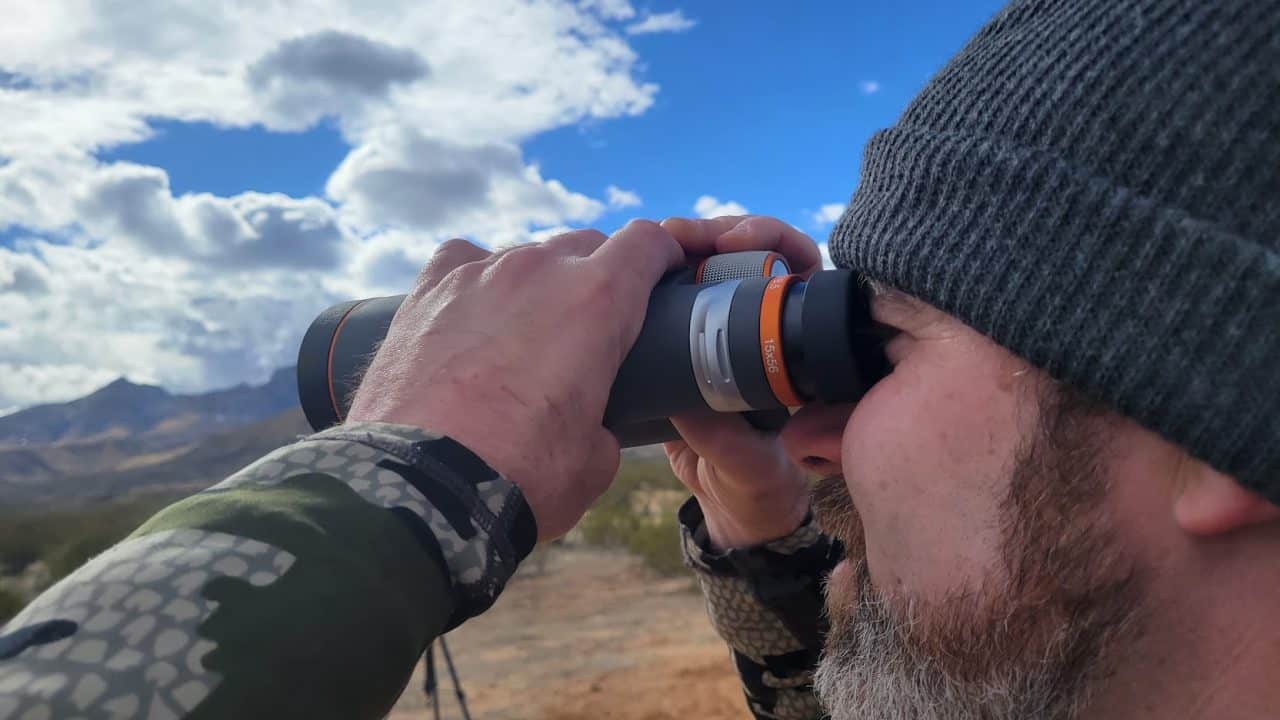
The best binoculars for hunting are the ones you will actually carry, actually glass through for six hours, and actually trust when the light goes. After seven years guiding elk, deer, moose and bear in Colorado’s Rockies at 50-plus days a season, my short answer is this: the Maven B1.2 is the best all-around hunting binocular for the money, the Leupold BX-4 Pro Guide HD is the one I hand people who care about never being stranded by a warranty, and if your budget has no ceiling, Swarovski and Leica are still the sharpest things you can put to your face.
This guide is built differently from the others you will find. It covers five brands, not fifteen — Maven, Leupold, Vortex, Leica and Swarovski — because those are the five I have actually hunted behind. There is no Zeiss on this list, no Athlon, no Nikon. Not because they are bad. Because I have not put seasons behind them, and I am not going to rank glass I have only read about.
That is the whole difference. Most roundups list every binocular a writer could get a link for. This one lists what a working guide carries, ranked against the hunts we actually run at Final Stalk: backcountry elk on foot, Southern whitetail out of a stand, and long glassing sessions where finding the animal is the job.
Why Trust This Guide
- 50-plus days a season behind glass, for clients. When you guide, spotting animals is not a hobby outcome. It is the service. Bad glass costs somebody their hunt.
- Five brands, several seasons each. Years on Leupold. Several seasons on Maven in both 15-power and 8- and 10-power. Vortex on my own rifle and in Moose’s bino harness. Leica and Swarovski alongside clients running them.
- Two warranty claims, both honored. Including a pair I ran over with the ranch Jeep.
- We say what we have not used. Where a binocular is on this page because we stock it rather than because we have hunted with it, we label it plainly.
How we link, and how we get paid. Final Stalk sells optics, and we list our own store first where we carry the exact model. We also link up to two outside retailers per binocular so you can compare, and we earn a commission on most of those at no extra cost to you. Two things worth knowing: Leupold runs no affiliate program at all, so we earn nothing from recommending them and link retailers instead. And where a retailer does not stock a model, we leave the button off rather than send you to a search page. None of it changed a word of this guide.
Best Binoculars for Hunting At A Glance
| Binocular | Category | Time Behind It | Price |
|---|---|---|---|
| Maven B1.2 10×42 | Best for elk hunting | Several seasons | $1,150 |
| Leupold BX-4 Pro Guide HD Gen 2 10×42 | Best low light | Several years | $599.99 |
| Maven B.5 15×56 | Best for long-range glassing | Several seasons | $1,800 |
| Leica Geovid Pro 10×42 | Best rangefinder binocular | Compared side by side | Check retailer |
| Vortex Razor UHD 10×42 | Best Vortex glass | Owned | $1,799.99 |
| Vortex Fury HD 5000 10×42 | Best rangefinder for bowhunting | Moose, since launch | $999.99 |
| Maven C.1 10×42 | Best under $500 | Used | $475 |
| Vortex Viper HD 10×42 | Best 10×42 all-rounder | Owned | Check retailer |
| Vortex Diamondback HD 10×42 | Best for the money | Owned | $249.99 |
| Leupold BX-5 Santiam HD 10×42 | Best for deer hunting | Brand, several years | Check retailer |
| Swarovski NL Pure 10×42 | Best at any price | Looked through, not owned | $3,199 |
Prices checked September 2026.
Shop All Binoculars At Final Stalk
How A Guide Actually Uses Binoculars
Before the picks, here is the part that changes what you should buy — and it is missing from every other guide on this page of results.
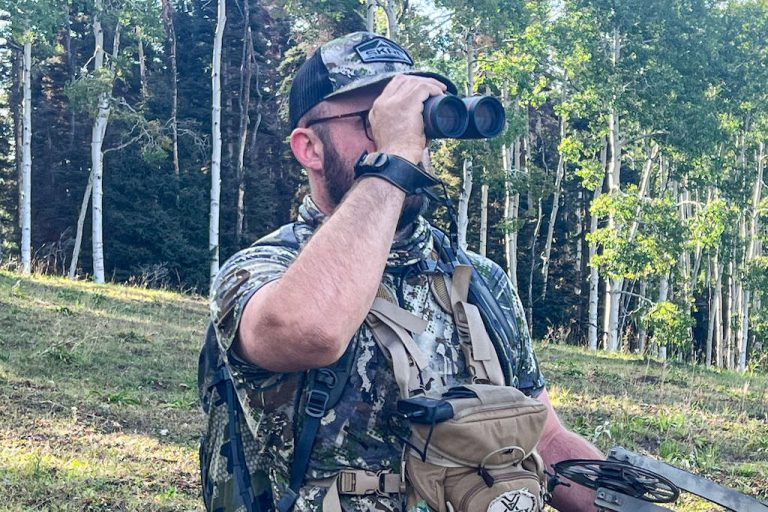
Most hunters use binoculars to confirm something they already saw with their eyes. Guides use them to find animals that are not visible at all. Those are different jobs and they want different glass.
Finding means sitting down, putting the binocular on something solid, and working a hillside in a grid — left to right, drop a band, right to left — for an hour or more. It is slow and it is boring and it is how bulls get found. Three things follow from that.
Weight matters more than magnification. The binocular you leave in the truck because it is heavy finds nothing. This is the single biggest reason I have moved so much glassing onto Maven — they are remarkably light for what you see through them.
Eye comfort beats peak sharpness. Anything that strains your eyes gets used less. On hour four, a slightly softer image you can look through comfortably beats a razor image that makes you squint.
A tripod is worth more than an upgrade. A tripod-mounted 10×42 will out-find a handheld 15×56 every time, because your heartbeat is doing more damage to the image than your glass is. If you are choosing between better binoculars and a tripod adapter, buy the adapter first. It is the cheapest optics upgrade in hunting.
That last point is why the 15-power section below comes with a condition attached.
Maven B1.2 10×42: Best Binoculars For Elk Hunting
- Configuration: 10×42 — $1,150 (8×42 is $1,100)
- Best for: All-around hunting, backcountry elk, anyone carrying glass all day
- Time behind it: Several seasons
- Buying model: Direct-to-consumer
This is my pick for the best binoculars for hunting if you are buying one pair and want it to do everything, and it is what I would hand somebody heading west after elk.
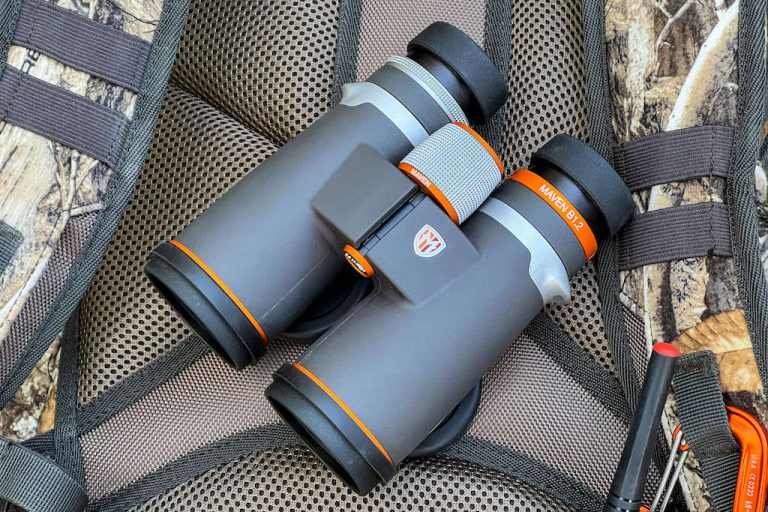
Here is the claim that matters, and I do not make it lightly: I have a hard time telling the B1.2 apart from a pair of Leica Geovids on picture quality and low-light performance. That is glass at a fraction of the price, and the reason is Maven’s direct-to-consumer model — you are not paying for a retail chain to sit in the middle.
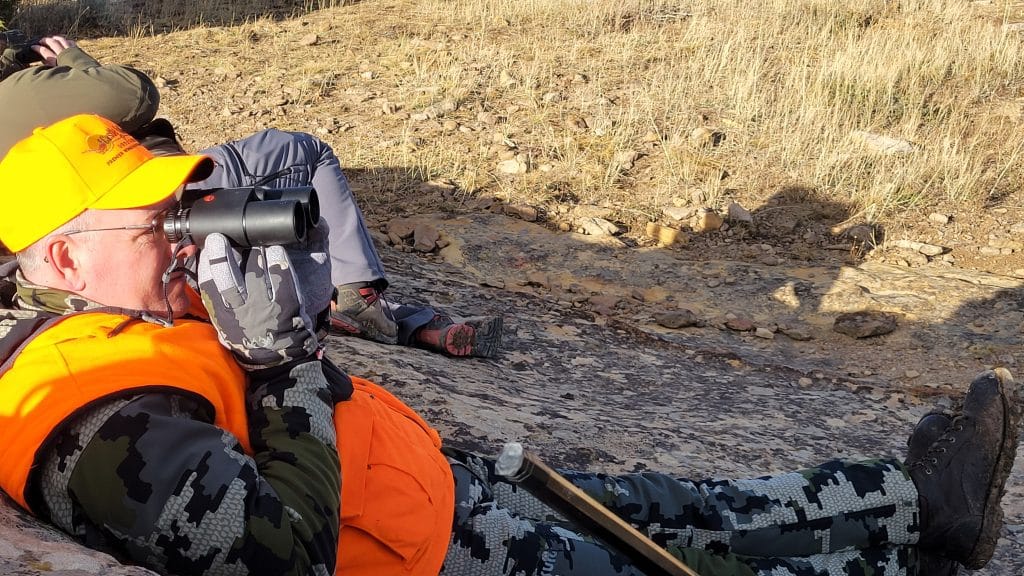
What sells them to me in the field is the weight. They are super lightweight and maneuverable, which sounds like a small thing until you have carried them for ten miles or held them up for the last twenty minutes of shooting light. Light glass gets used. Heavy glass gets left in the pack, and glass in the pack has never found an elk.
For the price, they cannot be beat. That is not marketing language, it is the conclusion I came to after several seasons of choosing them over things that cost more.
Pros: Picture quality and low-light performance I struggle to separate from Leica. Genuinely lightweight. Direct pricing means more glass per dollar than anything else here.
Cons: Direct-to-consumer means you cannot walk into a shop and handle them first. No retailer carries them, so there is no dealer network to lean on.
Leupold BX-4 Pro Guide HD Gen 2 10×42: Best Low Light Binoculars For Hunting
- Configuration: 10×42 roof prism
- Best for: Dawn and dusk glassing, and hunters who want to never think about a warranty again
- Time behind the brand: Several years
- In stock at Final Stalk: $599.99
I have run Leupold for years and the reason is not the spec sheet. The glass is comparable to Vortex in quality — genuinely good, not alpha — and it is reliable and moderately priced. What keeps me with them is rock solid customer service and a warranty that behaves like a warranty instead of a marketing line.
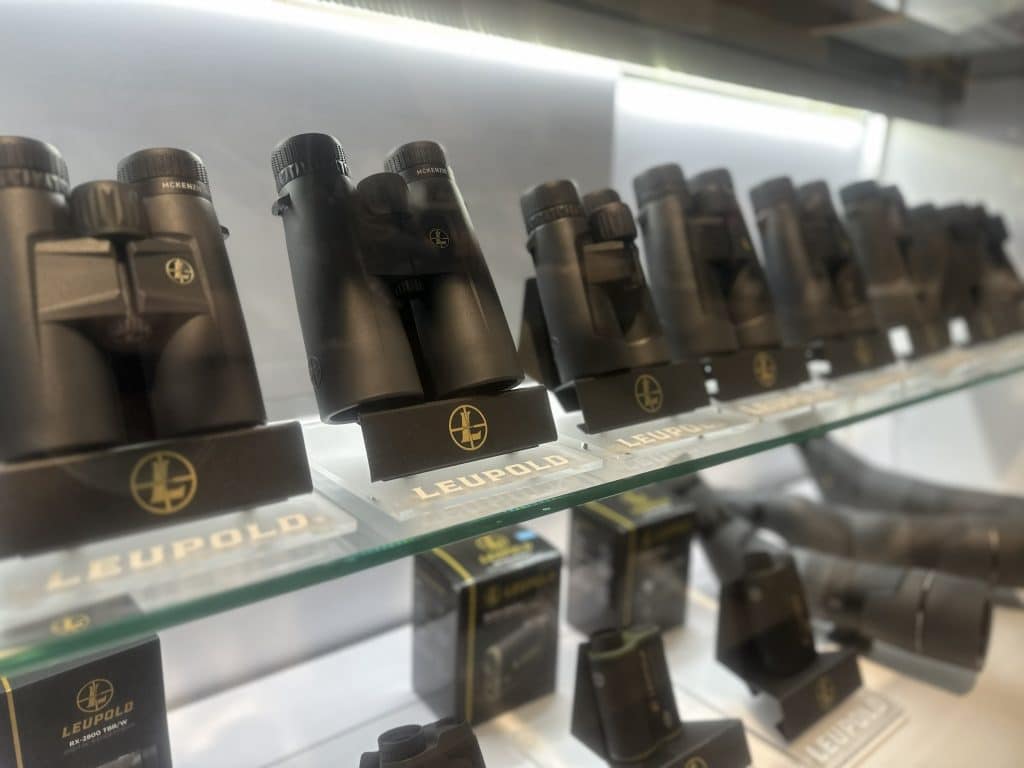
The Pro Guide HD is the model that earns its place in a guide’s kit, and its reputation for light gathering is deserved — it is the pair I reach for in the last twenty minutes of legal shooting light. It is also the one I hand a client who wants a serious binocular without stepping into four-figure glass.
Worth saying plainly: Leupold does not run an affiliate program, so nothing about this recommendation pays us anything from Leupold. We carry the Gen 2 in our own shop and link SCHEELS as an alternative. Make of that what you will — I would rather tell you than have you wonder.
The Leupold story, and why it fits us
Leupold started in 1907 as a one-man surveying repair shop in Portland, Oregon, run by a German immigrant named Fred Leupold who had come over at sixteen. For four decades they made surveying gear and water-monitoring instruments. Nothing to do with hunting.
Then Fred’s son Marcus missed a blacktail on the wet west side of Oregon’s Cascades because his scope fogged up. The line he is supposed to have come out of the timber saying is: “Hell! I could build a better scope than this!” He drew on the waterproofing work the company had done on gun sights during the war, filled the tube with nitrogen instead of air, and in 1947 Leupold shipped the Plainsman — the most water-resistant scope of its era. The company is still in family hands, still in Oregon, generations later.
I put that in a binocular guide on purpose. A hunter got failed by his gear at the worst possible moment, got angry about it, and built the fix himself — and a family business grew out of it. That is more or less how Final Stalk started too. Moose superglued the last broken fiber optic sight pin he was ever going to fix and went looking for something built properly. We review gear after it breaks, not before, because that is the moment that tells you the truth about a company.
Leupold has passed that test for me repeatedly. That is worth more than a few percent of light transmission.
Pros: Outstanding low-light performance for the price. Excellent customer service and warranty. American family-owned since 1907.
Cons: Not alpha glass. If you want the absolute sharpest image available, this is not it, and Leupold does not pretend otherwise.
Maven B.5 15×56: Best Binoculars For Long-Range Glassing
- Configuration: 15×56 — $1,800
- Best for: Tripod glassing open country and big timbered basins
- Time behind it: Several seasons
- Requires: A tripod. Not optional.
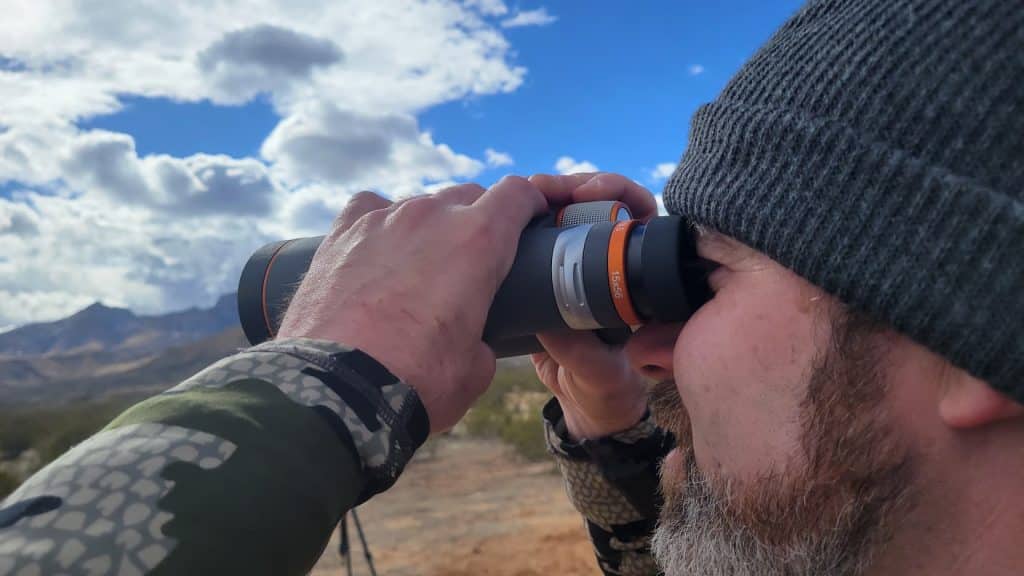
I have spent several seasons behind 15-power Maven glass alongside the 8- and 10-power, and it does a job nothing else does. When you are picking apart a basin a mile and a half away, 15x turns brown dots into animals and animals into bulls worth walking toward.
The condition: these live on a tripod. Handheld 15x is a party trick, not a hunting tool — your pulse will shake the image into uselessness inside a minute. Budget for the tripod and the adapter at the same time you budget for the binocular, or do not buy them.
One buying note: the B.5 comes in 10×56, 12×56, 15×56 and 18×56, and the family page opens on the 10×56 at $1,360. The button below goes straight to the 15×56 so you do not end up ordering the wrong magnification.
Used properly, this is the piece that finds animals other hunters walk past. It is also the piece most likely to stay in camp on a day when you are covering ground, which is exactly why it should not be your only binocular.
Pros: Finds animals a 10x will not resolve. Light for the magnification class. Maven pricing again.
Cons: Useless handheld. Situational by design — this is a second binocular, not a first one.
No retailer stocks Maven — they sell direct and through their own Amazon storefront only.
Leica Geovid Pro 10×42: Best Rangefinder Binoculars For Hunting
- Configuration: 10×42 with integrated laser rangefinder and ballistics
- Best for: Hunters who want alpha glass and a rangefinder in one unit
- Status: Compared side by side against the Maven B1.2. Not a pair I own.
The Geovid is the reason the Maven claim earlier in this guide means anything. It is the alpha rangefinding binocular, and it is the glass I have held the B1.2 up against on picture quality and low-light performance. That comparison is the single most useful thing in this article, so the benchmark deserves its own section.
What you are buying with a Geovid is European glass and a rangefinder that does not feel like a compromise on either side. Most combined units feel like a binocular with a laser bolted on, or a rangefinder someone stretched into two barrels. Leica’s does not. The image holds up against straight binoculars at the same price, which is not something you can say about most rangefinding glass.
The honest comparison: at last light, in the field, side by side, I have a hard time separating the Geovid from a Maven B1.2 that costs a fraction of it. That is a statement about how good Maven has gotten, not a knock on Leica — the Geovid is doing a harder job, because it is also ranging.
Where a Geovid earns its money over a Fury HD 5000 is glass quality and the ballistic solution. Where the Fury earns its money is the price tag. Both do the core thing, which is putting one device on your chest instead of two.
I am labeling this one honestly: I have compared them extensively and hunted alongside people running them, but I have not owned a pair for three seasons the way I have the Mavens. Treat this as a benchmark, not a long-term verdict.
Pros: Alpha glass with a rangefinder that does not compromise the image. The standard other rangefinding binoculars get measured against.
Cons: Alpha pricing. And a Maven B1.2 gets remarkably close on pure image for a lot less — you are paying for the ranging and the ballistics.
Retail links for the Geovid Pro are being finalised — check back shortly or ask us in the forum and we will point you at current pricing.
Vortex Razor UHD 10×42: Best Vortex Binoculars For Hunting
- Configuration: 10×42, Abbe-Koenig roof prism — $1,799.99
- Best for: The best glass Vortex makes
- Warranty: VIP — lifetime, transferable, no questions asked
Dollar for dollar I really like Vortex, and the Razor UHD is where their glass stops apologizing to anybody. If you have decided you are buying Vortex and the budget is open, this is the one.

Now, the warranty argument. Some people are apprehensive about Vortex’s lifetime no-questions-asked warranty — they read it as a company admitting its products break. I read it the other way around. It means they stand behind what they build, and I can tell you from experience that they do.
I had a pair go down and they replaced them by the end of the week. I ran another pair over with the ranch Jeep — entirely my fault, no defect involved, nothing a normal warranty would touch — and they replaced them for free. That is not a company hiding behind a policy. That is an awesome company.
Moose has the same read from the riflescope side. He documented a full warranty claim in our Vortex Optics review, including the part where they called and asked whether he wanted it repaired or replaced.
Buying note: the Razor UHD also comes in 8×32, 10×32, 10×50, 12×50 and 18×56. The buttons below go to the 10×42 specifically.
Pros: Vortex’s best glass. The VIP warranty is the real thing — two claims honored for me, one of them entirely my own fault.
Cons: Heavier than the Maven equivalents. At $1,799 it is priced against alpha glass without quite being alpha glass.
Vortex Fury HD 5000 10×42: Best Rangefinder Binoculars For Bowhunting
- Configuration: 10×42 with integrated laser rangefinder — $999.99
- Best for: Bowhunting and long range without carrying two devices
- Run by: Moose, since launch
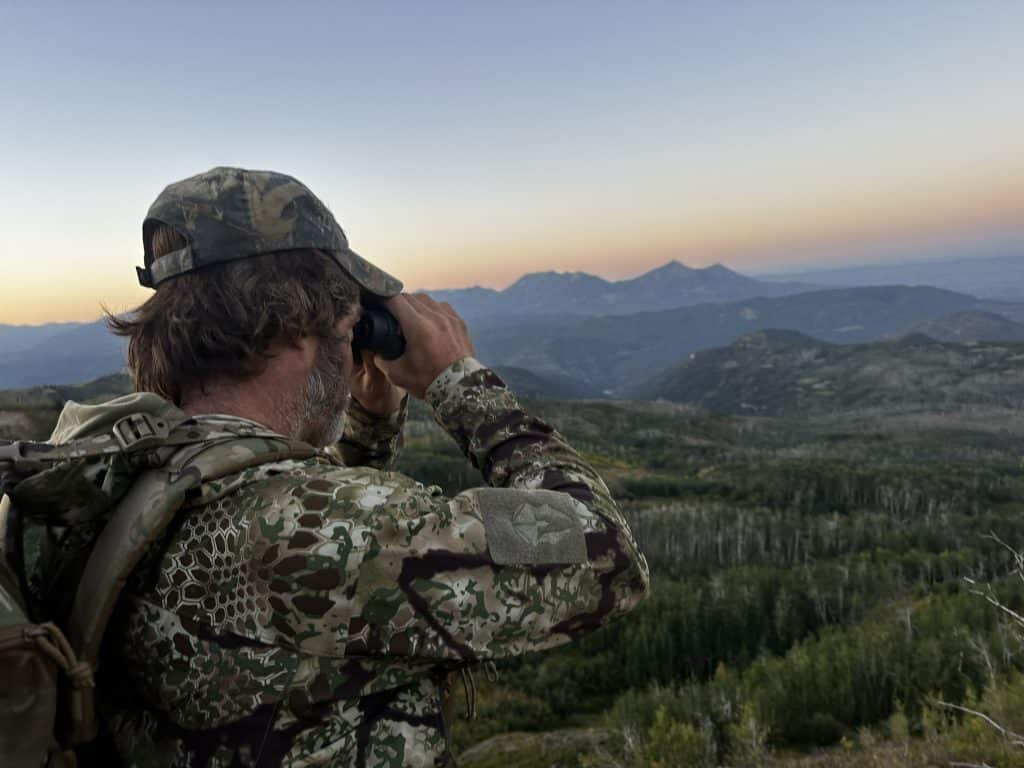
This is Moose’s binocular, not mine, and his argument for it is the strongest case in this whole guide: in this day and age there is no reason to carry a separate set of binos and a separate rangefinder. It is unnecessary weight, unnecessary bulk, and one more thing to fumble at the worst possible moment. For a bowhunter, where the whole game is getting a number fast and then drawing, that matters more than glass quality.
Think of it as the Geovid’s argument at a third of the price. You give up glass quality and the ballistic solution. You keep the thing that actually matters, which is one device instead of two.
He bowhunts with them constantly and has never had trouble getting a range fast enough on a moving animal. The longest he has pulled is 3,002 yards on rock, though he is the first to say that is a party trick — realistically it works out to 2,000 to 2,500 yards and in.
The honest tradeoff: one device means one failure point. Lose it and you have lost both your binocular and your rangefinder. Carry a waterproofed spare battery.
Full write-up including battery life and range testing is in our Vortex Optics review. If you would rather run two devices, our best laser rangefinders guide covers the standalone units.
Pros: Removes a device from your chest at a third of Leica money. Fast enough for bowhunting. Absurd battery life.
Cons: One failure point instead of two. Headline range figures are reflective-target numbers, not game numbers.
Maven C.1 10×42: Best Hunting Binoculars Under $500
- Configuration: 10×42 — $475 (8×42 is $450)
- Best for: Getting Maven glass without B-series money
- Buying model: Direct-to-consumer
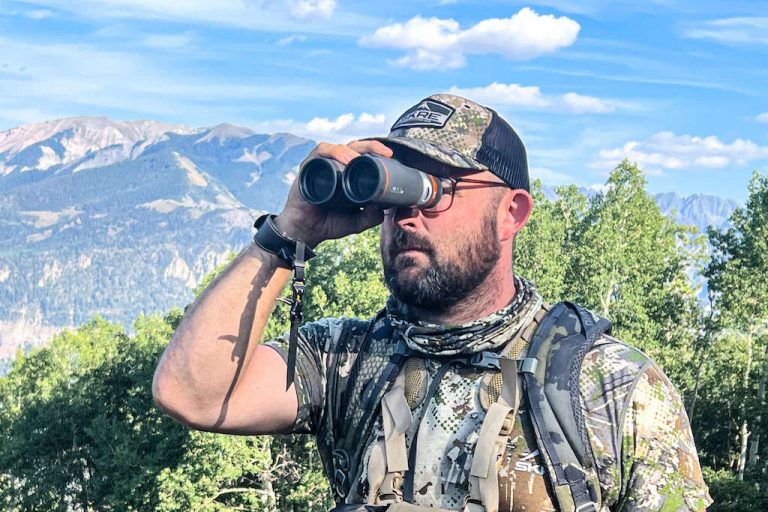
The C.1 is where I point people who like everything I have said about Maven but are not ready to spend B1.2 money. Same direct pricing logic, and at $475 it delivers more glass per dollar than most things sold at retail under five hundred dollars.
It is not the B1.2. The low-light gap is real and you will notice it in the last fifteen minutes of legal light, which is unfortunately when a lot of animals move. But as a first serious binocular, or as a backup pair that lives in the truck, it is hard to argue with.
Note that Amazon spells it “C1” and Maven’s own site “C.1” — same binocular.
Pros: Maven quality and pricing at an accessible number. Light. Excellent first serious binocular.
Cons: Gives up low-light performance to the B1.2. Non-rubberized body can be slippery when wet.
Vortex Viper HD 10×42: Best 10×42 Binoculars For Hunting
- Configuration: 10×42 roof prism
- Best for: The mid-tier default
- Warranty: VIP — lifetime, transferable

If the Razor is more binocular than you want to pay for and the Diamondback is less than you want to look through, the Viper is the answer, and has been for years. It is the pair I see in more bino harnesses at trailheads than anything else, and there is a reason for that.
If you are buying one 10×42 and want the safest possible choice, this is it. Same warranty behavior as the rest of the line, which after my Jeep incident I do not treat as a footnote.
Pros: The sensible middle. Genuinely good glass, VIP warranty, harness included.
Cons: Heavier than comparable Maven glass. Nothing about it is exciting, which is arguably the point.
Vortex Diamondback HD 10×42: Best Binoculars For The Money
- Configuration: 10×42 roof prism — $249.99
- Best for: First real binocular, or a truck pair
- Warranty: VIP — lifetime, transferable

The honest budget answer, and the pair almost everybody names when the question is value. This is the cheapest glass on this list I would actually take on a guided hunt, and the reason is the warranty as much as the optics. A binocular this affordable that gets replaced when you destroy it is a very different proposition to a binocular this affordable that does not.
You will notice the gap against the Viper in low light. In the middle of the day glassing a hillside, you will notice it a lot less than the price difference suggests.
One buying note: the Diamondback HD 10×42 exists in standard black, a Mossy Oak Bottomland finish around $30 more, and an anniversary edition. They are the same binocular. Buy whichever is cheapest in a finish you like.
Pros: Real HD glass at $249.99. Harness included. Same unconditional warranty as the flagship.
Cons: Low-light performance is where the money was saved. Not the pair for last-light glassing.
Leupold BX-5 Santiam HD 10×42: Best Binoculars For Deer Hunting
- Configuration: 10×42 roof prism
- Best for: Whitetail and mule deer, and staying in the Leupold ecosystem
If the Pro Guide is the sensible Leupold, the Santiam is for people who want the same company behind them and better light transmission in front of them. Everything I said about Leupold’s service applies here, because it is the same company and the same warranty.
It suits deer hunting particularly well. Most whitetail and mule deer glassing happens at first and last light, at moderate distance, from a stand or a glassing point rather than on the move — which is exactly where the extra light transmission pays and where the weight penalty does not hurt you.
I would think hard about this versus a Maven B1.2 at similar money. The Maven likely wins on pure image and weight. The Leupold wins on the fact that there is a dealer network, a phone number, and more than a century of not going anywhere.
Pros: Meaningful step up in glass over the BX-4. Leupold service. Widely available at retail.
Cons: Faces stiff competition from direct-to-consumer glass at the same price.
Swarovski NL Pure 10×42: Best Binoculars For Hunting At Any Price
- Configuration: 10×42 — $3,199
- Best for: Hunters with no budget ceiling
- Status: Looked through extensively. Have not owned a pair.
I really like Swarovski. If I had the budget I would have a pair. When it comes to a crisp, crystal clear picture they are unbeatable — just get your pocketbook out.
I am telling you plainly that I have not owned these, because the difference between looking through glass at a shop counter and living with it for three seasons is the difference this whole guide is built on. What I can say is that every time I put a Swarovski to my face I understand exactly what people are paying for, and it is not marketing.
NL Pure or EL? The $1,200 question
Here is something most guides get wrong, and I had it wrong myself until I checked. The EL has not been discontinued. You will read that the NL Pure replaced it. It did not. The EL 10×42 is still on shelves at around $1,999, and the NL Pure 10×42 sits above it at $3,199.
They are two tiers of the same alpha lineup, not a generation swap. The NL Pure buys you a noticeably wider field of view and updated ergonomics. The EL buys you Swarovski glass for twelve hundred dollars less.
If you have decided you want Swarovski and the NL Pure number is the thing stopping you, go look through an EL before you give up on the brand. That is the honest advice, and it costs us money to give it.
Pros: Unbeatable image. The standard everything else gets measured against.
Cons: $3,199. And I have not owned a pair, so treat this as an informed opinion rather than a long-term verdict.
The Glass We Have Not Hunted Behind
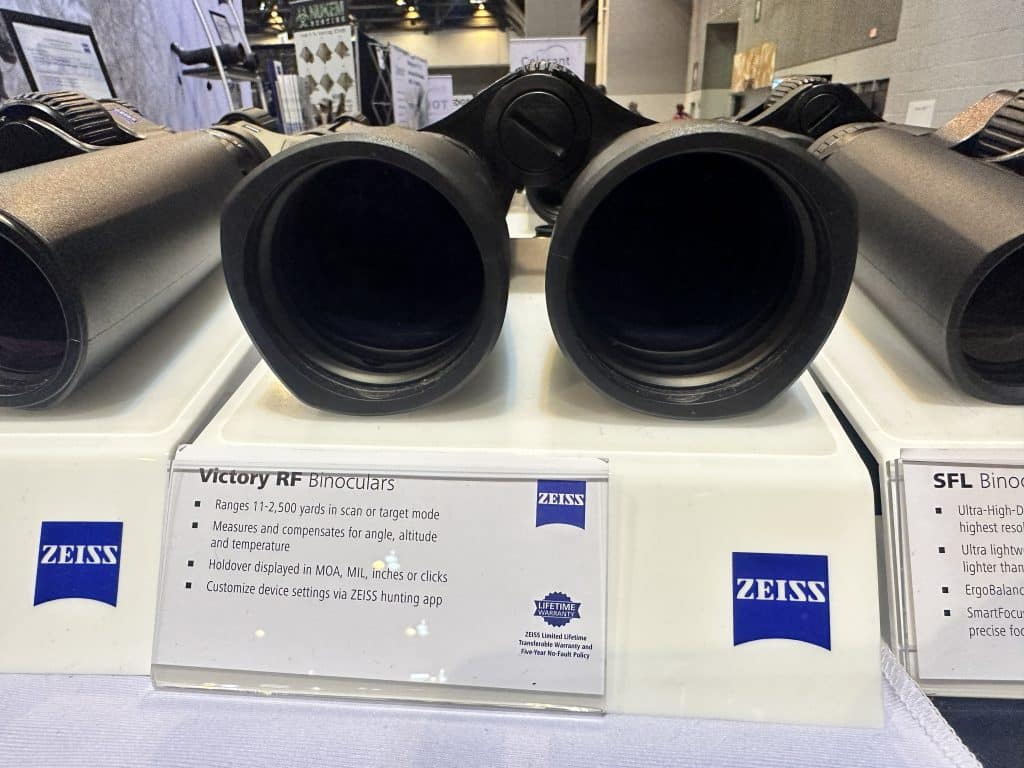
I have handled plenty of glass I did not put in this guide. Zeiss Victory RF is a good example — ranges out past 2,000 yards, compensates for angle and temperature, and the glass is exactly what you would expect from Zeiss.
But handling a binocular at a trade show and hunting behind it for three seasons are not the same thing, and I am not going to pretend otherwise to pad a list. Same goes for Nikon, Athlon, Tract, Meopta and a dozen others that are probably excellent.
If that means this guide is shorter than the ones with nineteen picks, fine. Every binocular ranked above has been on my chest, on Moose’s, or held up side by side against glass that was.
A Note On Image-Stabilized Binoculars
Image-stabilized binoculars are the one genuinely new thing in this category, and you will see the Sig Zulu6 HDX on every roundup written this year. We stock them at Final Stalk at $1,099.99 for the 12×42.
Neither of us has hunted behind a pair. So I am not going to rank them against glass I have run for seasons. What I will tell you is the theory, which is sound: stabilization attacks the same problem a tripod attacks — your heartbeat — but does it handheld. If that works as advertised, it moves the handheld magnification ceiling meaningfully.
If you want to try them, they are in the shop. When one of us has put a season behind a pair, this section becomes a real review.
Which Binocular For Which Final Stalk Hunt
Ranked against the hunts we actually run:
Backcountry elk, on foot, miles a day. Maven B1.2 10×42. Weight decides this one and it is not close. Add a tripod adapter before you add magnification.
Open-country glassing from a knob. Maven B.5 15×56 on a tripod, with a 10×42 on your chest for everything else. Two-binocular systems sound excessive until the day one of them finds a bull at two miles.
Southern whitetail out of a stand. Leupold BX-5 Santiam for the low-light edge, or a Vortex Diamondback HD if the budget is tight. Your shots are close, your glassing is short, and your binocular is going to get rained on and knocked around.
Bowhunting anything. Vortex Fury HD 5000, or a Leica Geovid Pro if the budget is there. One device on your chest instead of two, and the range is there when the animal steps out.
Guiding, or hunting other people’s tags. Leupold BX-4 Pro Guide HD. When it is somebody else’s hunt on the line, the company that answers the phone matters more than the last five percent of image quality.
Unlimited budget. Swarovski for pure image, Leica if you want the rangefinder built in. Look at the Swarovski EL before you assume you need the NL Pure.
What Actually Matters When Buying Hunting Binoculars
Magnification and objective lens
In 10×42, the first number is magnification and the second is the objective lens diameter in millimeters. A bigger objective gathers more light, which matters at dawn and dusk. It also weighs more. That trade is the whole game.
For most hunting, 10×42 is the right default. Go 8×42 if you hunt thick country or your hands are unsteady. Go 15×56 only if you are putting it on a tripod.
Why weight beats almost everything
A binocular you leave behind finds nothing. I would rather hunt with good glass I always have on my chest than excellent glass I sometimes leave in the truck. This is the most underrated spec in optics and it never appears in a comparison chart.
Field of view
Measured in feet at 1,000 yards. Wider means you cover ground faster when grid glassing and lose less time re-finding an animal that moved. More magnification generally means narrower field of view at the same objective size.
Eye relief
The distance your eye can sit from the eyecup and still see the full image. If you wear glasses, want at least 15mm and preferably more. Get this wrong and you will hate an otherwise excellent binocular.
Exit pupil and low light
Divide objective by magnification: a 10×42 gives 4.2mm. Your pupil opens to roughly 7mm in the dark, so a bigger exit pupil means a brighter image when it counts. But glass quality and coatings matter at least as much — a large exit pupil on cheap glass will not beat a smaller one on good glass.
Check the configuration before you click buy
This one costs people real money. Almost every binocular here ships in four or five magnifications off the same product page, and the page usually opens on the cheapest one. The Maven B.5 page defaults to 10×56 at $1,360 when the one I am recommending is the 15×56 at $1,800. The Vortex Razor UHD comes in six configurations. Read the box before you check out.
The warranty is a spec
Treat it as one. Vortex’s VIP warranty is lifetime, transferable and no-questions-asked, and I have collected on it twice including once for damage that was entirely my fault. Leupold’s service record is why I keep going back. Swarovski covers manufacturing defects rather than your mistakes. That difference is worth real money over a decade.
Frequently Asked Questions
What magnification binoculars are best for hunting?
10×42 for most hunters and most terrain. Drop to 8×42 in thick country or if your hands shake. Only go to 15×56 or higher if you are mounting it on a tripod — handheld 15x shakes too much to be useful.
What are the best binoculars for elk hunting?
The Maven B1.2 10×42. Elk hunting means miles on foot and long glassing sessions, so weight and eye comfort decide it. A light pair you always have on your chest will find more elk than heavier glass you leave in the truck.
Are Maven binoculars as good as Leica or Swarovski?
I have a hard time telling a Maven B1.2 apart from a pair of Leica Geovids on picture quality and low-light performance, and I have spent several seasons behind the Mavens. Swarovski is still a step above on pure image. The Maven gets you most of the way there for a fraction of the price, because they sell direct.
Leica Geovid or Vortex Fury for rangefinder binoculars?
The Geovid is better glass with a proper ballistic solution and it costs accordingly. The Fury HD 5000 does the core job — one device instead of two — at around a third of the money. If you are bowhunting and want the ranging without alpha-glass spending, the Fury is hard to argue with. If you shoot long range and want the solution calculated for you, the Leica earns it.
Where can I buy Maven binoculars?
Only from Maven directly or through their own Amazon storefront. No retailer carries them — SCHEELS, Sportsman’s and the rest stock zero Maven product. That direct model is exactly why the glass costs what it does.
Is the Vortex lifetime warranty a red flag?
Some people read it that way — that a company offering an unconditional warranty must expect failures. My read is the opposite. I have had a pair fail and get replaced within the week, and I ran another pair over with a ranch Jeep and they replaced those for free too. That is a company standing behind what it builds.
Has the Swarovski EL been discontinued?
No. The NL Pure is the newer flagship above the EL, not a replacement for it. The EL 10×42 is still sold at around $1,999 against $3,199 for the NL Pure. If you want Swarovski glass and the NL Pure price is the obstacle, look at the EL.
Do I need a tripod for hunting binoculars?
If you glass seriously, yes, and it is the cheapest optics upgrade available. A tripod-mounted 10×42 will find more animals than a handheld 15×56, because your heartbeat degrades the image more than your glass does. Buy the adapter before you buy better binoculars.
Why is there no Zeiss, Nikon or Athlon on this list?
Because we have not hunted behind them. This guide covers five brands because those are the five we have actually run or compared side by side for seasons. Plenty of good glass exists that is not on this page, and we would rather tell you that than rank optics we have only read about.
What are the best budget binoculars for hunting?
The Vortex Diamondback HD 10×42 at $249.99. It is the cheapest glass here I would take on a guided hunt, and the unconditional warranty makes an affordable binocular a much better bet than an affordable binocular without one. If you can stretch to $475, the Maven C.1 is a real step up.
More from Final Stalk: Best Spotting Scopes · Best Laser Rangefinders · Vortex Optics Review · Best Elk Hunting Gear · Best Thermal Monoculars
Tell Me I’m Wrong
I know leaving Zeiss and Nikon off a binocular list will bother people, and I know the Maven-versus-Leica claim is a big one. Good. If you have run them side by side and come out somewhere different, I want to hear it — and I especially want to hear from anyone who has actually hunted behind image-stabilized glass, because that is the honest gap in this guide. Drop it in the comments or bring it to the Final Stalk forum and let’s argue about it.







Hey, Nice review article, I just missed the Stealth Vision Binoculars. They are 10×42, but they say it lighter and smaller than the others.
I saw that they are pretty good for long-range shooting. They have good clarity and are lighter and smaller than the other ones.
Maybe you can make a review for them too: stealthvision.com
What a great post on the top best binoculars for hunting. All the binoculars have great features and it is very helpful during hunting. all the products are nice and have good quality.
Nice review article, I just missed the Stealth Vision Binoculars
I would recommend the Bushnell Legend Ultra HD Binoculars for hunting. They are a great value for the money and have great optics.