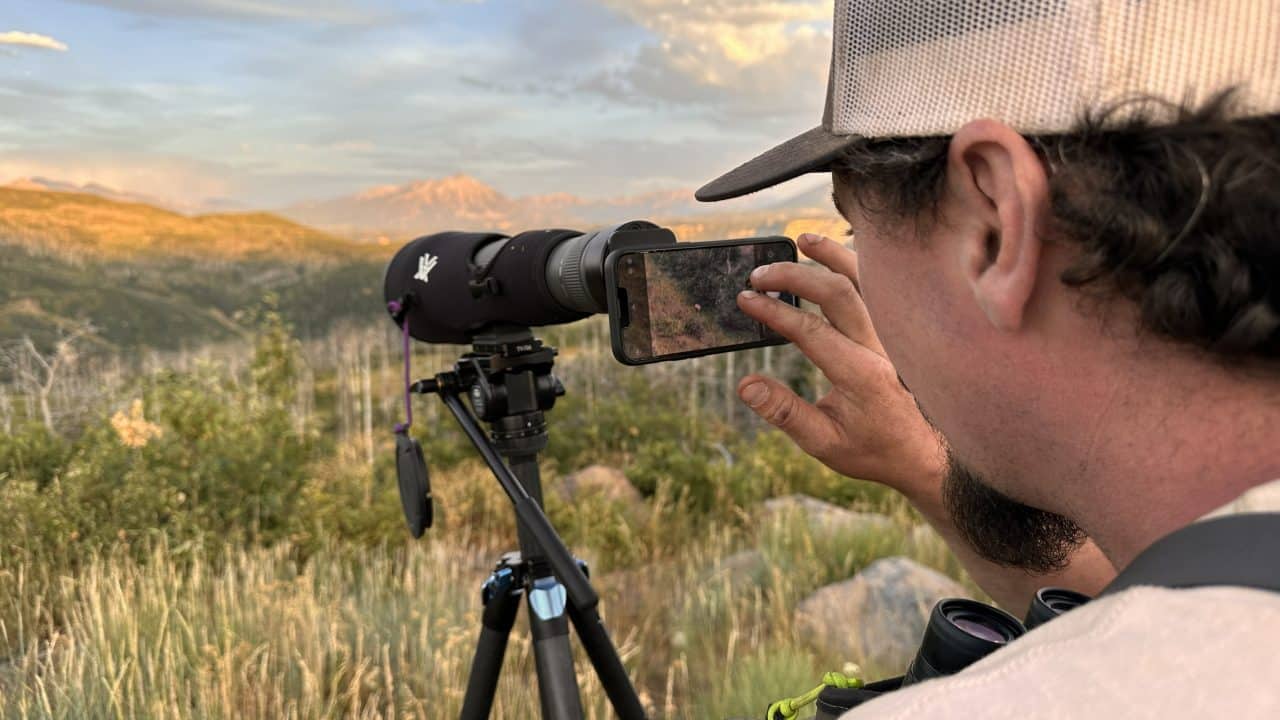
Every Vortex Optics review on the first page of Google covers one scope, or compares two, and almost all of them frame it around a defensive rifle. This one covers five optics I have owned and used across hunting and hard professional work, and it ends with the thing nobody else documents: what actually happens when you file a Vortex warranty claim.
I have shot behind Tasco, Pentax, Leupold, Simmons, Schmidt & Bender, Premier, Nightforce and Vortex. Over the past several years I have bought multiple Vortex optics and been impressed every time, which is why I keep coming back. The short version: Vortex is not the best glass on the market and does not need to be. What they are is the best combination of glass, tracking, warranty and customer service at every price point I have shopped, and the warranty is not a consolation prize for lower quality — that is a myth I want to put down in this review.
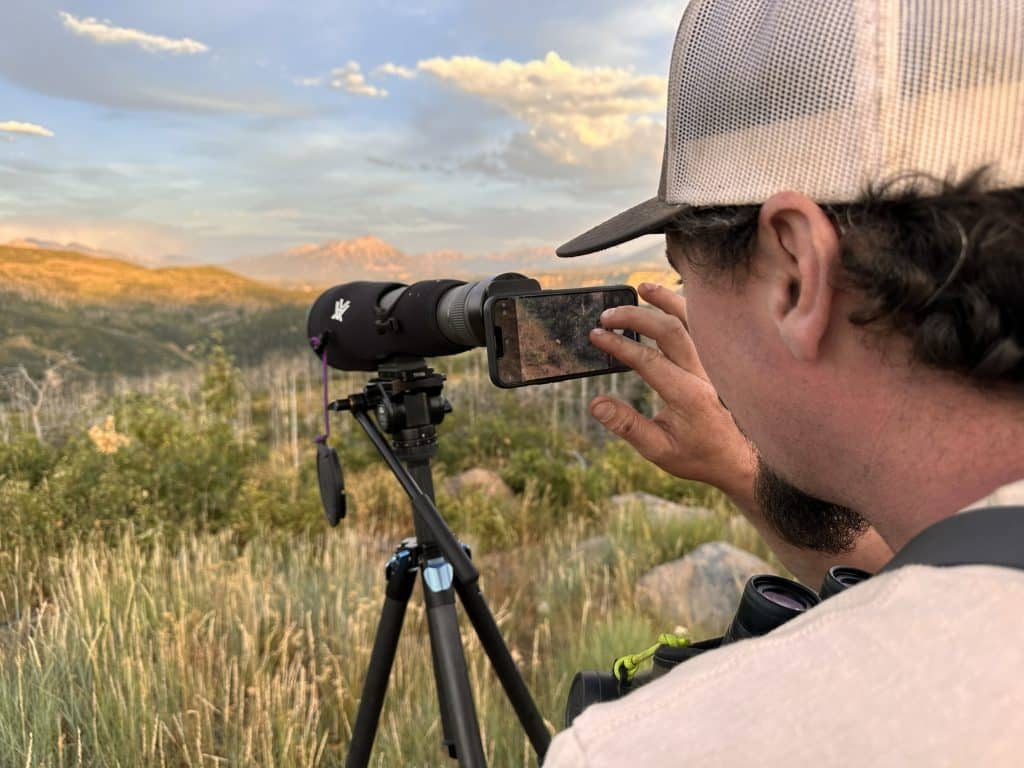
What follows is a hunting-first Vortex Optics review: a backcountry mountain scope on a carbon 300 Win Mag, a rangefinding binocular I bowhunt with all season, two Strike Eagles, and the flagship 1-10x. Plus the one optic that came back from the dead.
Why Trust This Review
- Eight brands of comparison, not one. I have owned or shot Tasco, Pentax, Leupold, Simmons, Schmidt & Bender, Premier, Nightforce and Vortex. I am not comparing Vortex to nothing.
- Bought, not seeded. Every optic here came out of my own pocket. Vortex has not paid for placement and did not see this before publication.
- A real warranty claim, start to finish. Not a warranty policy I read off a website — an optic I broke, sent in, and got back.
- Hunting and hard use. These have been on a backcountry rifle, a bow hunt, a long-range setup, and a work rifle that got treated worse than any hunting gun ever will.
How we link, and how we get paid. Final Stalk does not sell Vortex Optics, so there is no house pick to push on this one. We link up to two retailers per optic so you can compare, and we earn a commission on those at no extra cost to you. Worth knowing: Vortex’s own affiliate program pays only on apparel and accessories, not on optics, so we earn nothing whichever way you go on the glass itself. Where a retailer does not stock a scope, we leave the button off rather than send you to a search page. None of this changed a word of the review.
Vortex Lineup At A Glance
| Optic | Best For | My Verdict |
|---|---|---|
| Razor HD LHT 4.5-22×50 FFP | Backcountry mountain rifle | Best hunting scope here |
| Fury HD 5000 LRF Binocular | Bowhunting, long range, all-day glassing | Replaces two pieces of gear |
| Razor HD Gen III 1-10×24 FFP | Close-to-600 yard work, one optic | They hit it out of the park |
| Strike Eagle 5-25×56 FFP | Long range on a budget | Priced far below what it is |
| Strike Eagle 1-8×24 SFP | Budget LPVO that will not quit | The survivor |
Prices move fast on glass — each optic below links to the retailers that actually stock it so you can check today’s number.
Shop All Optics At Final Stalk
What Actually Happens When You File a Vortex Warranty Claim
Everybody quotes the VIP warranty. Almost nobody has actually used it and written down what happened, so here is mine.
The optic was a Strike Eagle 1-8×24 that had moved from my 5.56 AR to a work rifle, where it got treated worse than any hunting gun ever will. It has been dropped, dunked in saltwater, and generally beaten on for years, and it held zero through every bit of it.
Then, without my knowledge, somebody tried to free up a stuck muzzle device by beating on it with a ball-peen hammer while it was still on the gun. I took the rifle to the range the next day. It still shot true — which tells you something on its own — but there was moisture inside the scope and the rear lens had rotated in its housing.
I called Vortex and sent it in. They called me back and asked whether I wanted a replacement or wanted it repaired. That is not a question most companies ask. The scope had sentimental value at that point, so I asked them to fix it. A week later it was back on the gun.
Every time I call, they are the easiest people in the industry to deal with. They help right away, and somewhere in the conversation they ask what size shirt you wear and what color ball cap you want. The lifetime, transferable, no-questions-asked warranty speaks for itself.
You will hear people say the warranty exists because the quality is lower. That is nonsense. They stand behind their products. I have had other companies offer 50% toward a new item when something failed, which is not a warranty, it is a coupon — and that experience is a large part of why I moved to Vortex in the first place.
Josh has collected on the same warranty twice on the binocular side, including a pair he ran over with a ranch Jeep. That story is in our best binoculars for hunting guide.
Vortex Razor HD LHT 4.5-22×50 FFP
- Type: Lightweight first focal plane hunting riflescope
- Reticle: MOA
- Illumination: Push button
- Mounted on: Carbon-barreled backcountry 300 Win Mag
- Best for: Mountain rifles where every ounce counts
This is the one I would recommend to most people reading a hunting site. I was in the market for high-quality glass that would not punish me for carrying it, called Vortex, and it showed up at my office. I mounted it in Vortex rings and started driving tacks immediately.
It is extremely light and it holds zero after a real backcountry beating — not range-bag handling, but strapped to a pack through deadfall and rock. For a lightweight mountain gun or a general hunting rifle, I do not think you can beat it at the weight. It is the scope I would build a backcountry rifle around, and it pairs with the rest of what we carry in the elk hunting gear list.
One preference, not a defect: it has push-button illumination and I would rather have a dial. Buttons are fine when you set them at camp. A dial is better when you are adjusting in fading light with cold hands. Your mileage will vary on that one.
Pros: Genuinely light, excellent glass, holds zero through backcountry abuse, FFP with a usable MOA reticle.
Cons: Push-button illumination instead of a dial. Priced above the Strike Eagle line.
Vortex restricts riflescope sales on Amazon, so there is no Amazon option for this one.
Vortex Fury HD 5000 Rangefinding Binocular
- Type: 10×42 laser rangefinding binocular
- Longest range I have gotten: 3,002 yards on rock
- Realistic working range: 2,000–2,500 yards and in
- Best for: Bowhunting, long range, anyone tired of carrying two devices
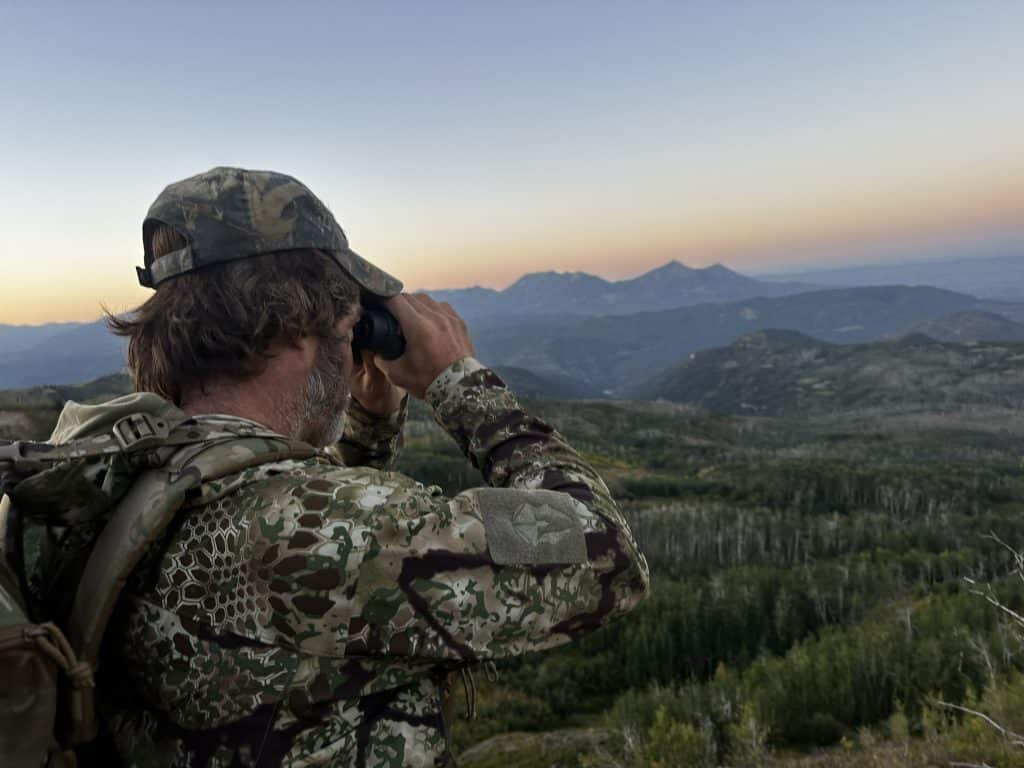
I love this thing and it has been my top performing rangefinder since the day they came out. My argument is simple: in this day and age there is no reason to carry a separate set of binos and a separate rangefinder. It is unnecessary weight, unnecessary bulk, and one more thing to fumble at the worst possible moment. If you would rather run two devices, our best laser rangefinders guide covers the standalone units.
I bowhunt most of the time and use it constantly — it has never been an issue getting a range fast enough on an animal that is moving. I also shoot long range, where it is not a convenience, it is the difference between an ethical shot and a guess. Knowing the number is only half of it though; where you draw your personal line is the other half, and we argued that one out in how far is too far on an elk.

Battery life is absurd. I genuinely do not know how long, because it just keeps going. That said, always keep a waterproofed backup battery on you. The failure mode on a rangefinding binocular is that you lose both your binos and your rangefinder at once.
On range: I have gotten 3,002 yards on rocks, but treat that as a party trick. Realistically it picks up 2,000 to 2,500 yards and in, and on game at hunting distances it is instant. Reflectivity is everything with any laser — do not buy on the headline number, yours or anyone else’s.
Pros: Eliminates a second device, fast enough for bowhunting, insane battery life, real long-range capability.
Cons: One failure point instead of two. Headline range numbers are reflective-target numbers, not game numbers.
Shop All Binoculars At Final Stalk
Vortex Razor HD Gen III 1-10×24 FFP
- Type: Flagship first focal plane LPVO
- Reticle: MOA, daylight-bright illumination
- Tested on: 16-inch 5.56 running 77 grain
- Confirmed hits to: 900 yards
They hit this one out of the park. Daylight-bright reticle and 10x in the same optic, and to my mind it ends the argument about red dots and magnifiers — more on that below.
The reticle lines up perfectly with my 16-inch 5.56 running 77 grain, and I have crushed targets out to 900 yards with it. That is not a typo and it is not a brag about the shooter. It is what a good FFP MOA reticle does when the holds actually match your load.
Personally I think the military should have bought these over the 1-8x Nightforce. I understand why everyone wants MRAD so they can move optics between weapons, but the fact is we are still shooting 5.56, and a monkey can shoot this reticle.
The only complaint is the price. Vortex is proud of these and it shows. If you can afford it, you cannot beat it. If you cannot, the Strike Eagle 1-8x is hard to beat, especially with the newer reticle.
Pros: Daylight-bright reticle, true 1x to 10x, alpha-tier glass, reticle that works at both ends of the magnification range.
Cons: Expensive. Heavy compared to a red dot. Overkill if you never shoot past 200 yards.
Vortex Strike Eagle 5-25×56 FFP
- Type: First focal plane long-range riflescope
- Reticle: MOA, illuminated with multiple settings
- Mounted on: LaRue 7.62
- Best for: Long range without flagship money
I called Vortex looking to put a new scope on a 7.62 and told them I was on a budget but needed glass with an adjustable reticle. I was looking at the Viper PST and got steered to the Strike Eagle line instead, where they had put their newer technology. It cost less than the PST and was more scope than I was asking for.
I absolutely love it. The glass is great, the illuminated reticle has multiple settings, and it moves easily through the magnification range — add a throw lever and it is effortless. It has held zero the entire time. Honestly it is one of my favorite scopes I own, and it is priced a lot lower than anyone would guess looking through it.
Worth noting what happened there: Vortex talked me down in price. That is not standard behavior for a company on a sales call and it is part of why I keep buying from them.
Pros: Outstanding value, great glass for the tier, multi-setting illumination, smooth magnification, has held zero throughout.
Cons: Heavy. It is a 56mm long-range scope, not something to hike with.
Vortex restricts riflescope sales on Amazon, so there is no Amazon option for this one either.
Vortex Strike Eagle 1-8×24 SFP
- Type: Second focal plane LPVO
- Reticle: MOA / BDC
- Mounted on: 16-inch 5.56 AR running 77 grain, later a work rifle
- Years in service: Multiple, including the hammer incident above
This is where my Vortex habit started, and it is still the scope I recommend to anyone who wants a capable LPVO without flagship money.
The reticle lined up with my 16-inch barrel shooting 77 grain, which is the single most useful thing I can tell you about it — see the section below on why that matters more than people realize. My only complaint at the time was that I wished the reticle were daylight bright, but for the price it worked well. The newer reticle has improved on that.
Then it moved to a work rifle and took the ultimate test, and it has always held zero no matter what happened to it. That includes the incident that finally put it in for warranty service, and even then it still shot true the next day at the range.
Pros: Outstanding value, BDC reticle that matches common 5.56 loads, has survived abuse that would kill most optics, held zero throughout.
Cons: Original reticle is not daylight bright. SFP means holds only match at max magnification.
Why Reticle-to-Load Matching Matters More Than Glass
Twice above I mentioned that the reticle lines up with a 16-inch barrel shooting 77 grain. That is not a throwaway detail, and almost nobody writing scope reviews talks about it.
A BDC reticle is drawn around an assumed velocity. If your load and barrel produce something meaningfully different, every hold below your zero is wrong — and it is wrong by more the farther out you go. People buy a scope, shoot it at 100, decide it is fine, and then wonder why they cannot connect at 400.
Two practical takeaways. First, before you buy, look up the reticle subtensions and check them against your actual load, not the load on the box art. Second, if the reticle does line up with what you shoot, that is worth more than a modest upgrade in glass quality. Clear glass will not fix a hold that is off by eight inches at 500 yards.
This is also the strongest argument for first focal plane on any rifle you shoot at distance. In FFP the holds are correct at every magnification. In SFP they are only correct at one, which is fine if you remember it and a problem if you forget.
The 1-10x LPVO vs Red Dot and Magnifier Argument
I think the days of running a 1x red dot, or a red dot with a magnifier behind it, are over for anyone who might need to reach out.
Here is the test. Shoot inside a building, then try to accurately identify and engage something at 400 to 600 yards in a tree line. With a red dot you will struggle to even see it clearly, and you are guessing on the hold. Guessing is not a shooting solution.
A 1-10x in MOA answers both problems with one optic. At 1x it is fast enough for close work. At 10x you can actually identify what you are looking at and hold precisely for it. The reticle does the math you were previously eyeballing.
The honest counterargument: weight and price. A red dot is lighter and cheaper, and if you genuinely never shoot past 200 yards, it is enough. But if your rifle needs to cover both ends, an LPVO is the answer and the Gen III is the best one I have used.
Where Vortex Sits Against Leupold, Nightforce and Schmidt & Bender

I have shot behind all of these, so I will be straight about it.
Schmidt & Bender and Premier make better glass than Vortex. That is not a close call at the top end and anyone who tells you otherwise has not looked through both back to back. You pay accordingly.
Nightforce is the tracking and durability benchmark a lot of people measure against, and it earns that. Where I part ways is on value — I do not think the gap in the field justifies the gap on the receipt for most hunters.
Leupold is the closest comparison for a hunting audience and it is a real choice, not a wrong one. Lighter in some lines, long American track record, and a service department Josh rates as highly as Vortex’s.
Where Vortex wins is the whole package at every price point: glass that punches above its tier, tracking that has held for me under abuse, a warranty that is genuinely no-questions-asked and transferable, and customer service that has twice talked me toward what I actually needed instead of what cost more.
They also do a great deal for military and law enforcement, which matters to me personally.
My honest read: if you have unlimited budget and glass quality is your only criterion, buy European. If you want the most capability per dollar and you want to never worry about what happens when something breaks, Vortex is where I keep landing.
The Final Wrap-Up
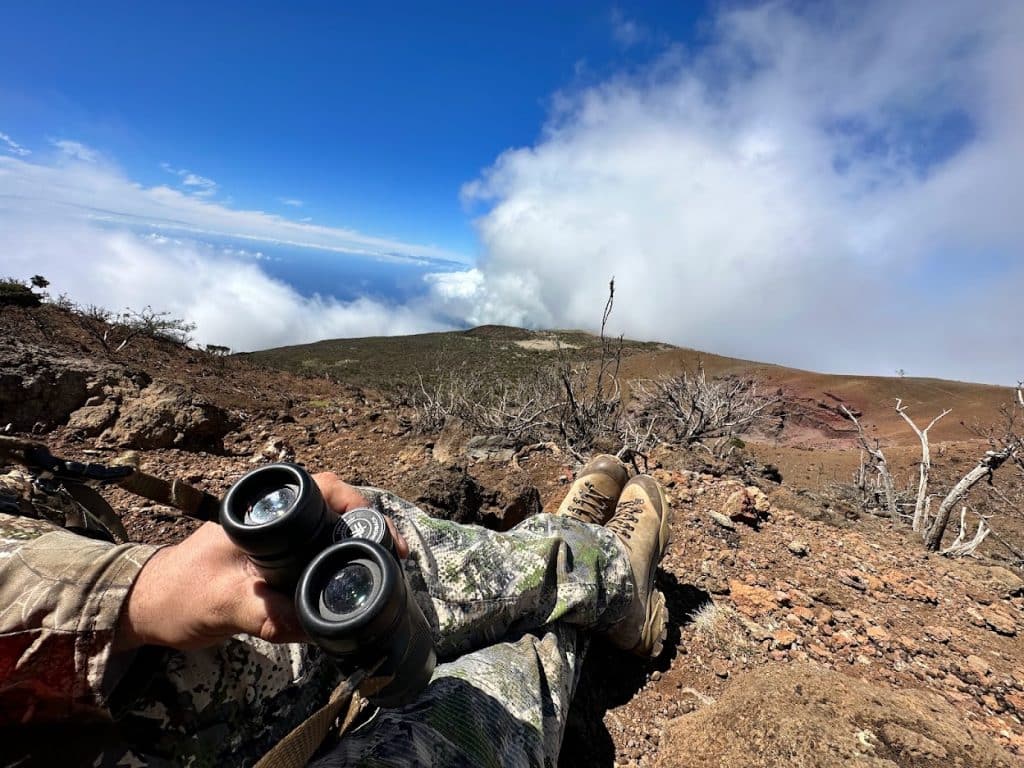
Across all the years and all the other brands I have used, I cannot say a bad thing about Vortex. For now they are my go-to optics — because the customer service is top notch, the warranty is the best in the industry, they take care of military and law enforcement, and by the way they have always held zero and tracked perfectly even after the torture I have put them through.
If you are buying one thing off this list: the Razor HD LHT if you hunt the mountains, the Fury HD 5000 if you are still carrying separate binos and a rangefinder, and the Strike Eagle 1-8x if you want to find out what the fuss is about without spending flagship money.
We will be running side-by-side comparisons against other brands in the future. This Vortex Optics review gets updated as things break or new glass enters the rotation. Stay tuned.
Shop All Optics At Final Stalk
Frequently Asked Questions
Is the Vortex VIP warranty actually as good as people say?
Yes, and I have used it. It is lifetime, fully transferable, and no-questions-asked. When I sent in a damaged scope they called and asked whether I wanted it repaired or replaced, then had it back on my rifle a week later. It is not a consolation prize for lower quality — that is a myth.
Why can’t I buy Vortex riflescopes on Amazon?
Vortex restricts riflescope sales through Amazon, so most of their scopes are not listed there. Binoculars and some accessories are. For scopes you are looking at authorized dealers like SCHEELS and Sportsman’s Warehouse, or Vortex direct.
Is the Vortex Strike Eagle good enough, or should I save for a Razor?
The Strike Eagle is good enough for most people and most uses. The Razor is better glass with a daylight-bright reticle and it costs several times as much. If you shoot in low light regularly or need to identify targets at distance, the Razor earns it. Otherwise buy the Strike Eagle and spend the difference on ammunition.
Which Vortex scope is best for backcountry hunting?
The Razor HD LHT. It is genuinely light, the glass is excellent, and it has held zero for me through backcountry abuse on a carbon-barreled 300 Win Mag. Weight matters more than almost anything else when you are carrying a rifle for miles.
Is the Vortex Fury HD 5000 worth it over separate binos and a rangefinder?
For me, yes. Carrying two devices is unnecessary weight and one more thing to fumble when it counts. I bowhunt with the Fury constantly and it ranges fast enough on moving animals. The tradeoff is that a single failure costs you both functions, so carry a waterproofed spare battery.
How far will the Fury HD 5000 actually range?
The longest I have gotten is 3,002 yards on rock. Realistically it works out to 2,000 to 2,500 yards and in. Any laser rangefinder’s headline number is a reflective-target number, not a number you will see on an elk.
Is Vortex glass as good as Leupold or Nightforce?
Not at the very top end. Schmidt & Bender and Premier make better glass, and Nightforce sets the tracking benchmark. Where Vortex wins is capability per dollar across every price point, plus the warranty and customer service. For most hunters that combination is the better buy.
Does the Vortex Strike Eagle BDC reticle match my rifle?
It depends on your barrel length and load. Mine lines up with a 16-inch 5.56 running 77 grain. Before you buy, pull the reticle subtensions off Vortex’s site and check them against your actual load. A reticle drawn for a different velocity will put you off by a lot at distance.
More from Final Stalk: Best Binoculars for Hunting · Best Laser Rangefinders · Best Spotting Scopes · Best Thermal Monoculars · How Far Is Too Far On An Elk
Tell Me I’m Wrong
I know the LPVO-versus-red-dot take will bother some of you, and I know there are people who will die on the Leupold hill. Good. If you have run a Fury against a Sig or a Leica, or a Razor against a Nightforce, I want to hear what you found. Drop it in the comments or bring it to the Final Stalk forum and let’s argue about it.






Leave a Reply