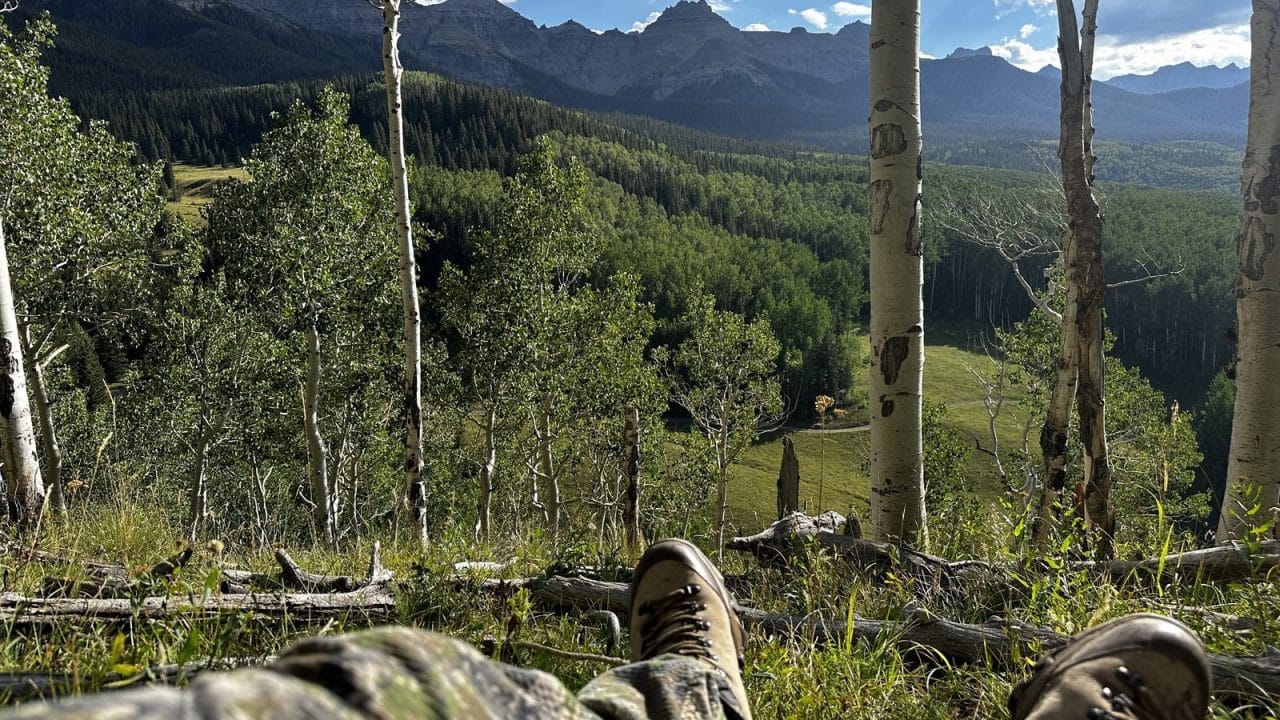
Nobody writes the honest article about wounded elk, so here it is. Seven years guiding Colorado’s Rockies, 50-plus days a season, and I’ve watched dozens of elk take an arrow and walk off. Not from laziness. Not from quitting. I tracked a bull five days near Ouray and came home empty. I stood in bloody snow outside Hotchkiss looking at chunks of lung and still lost the cow. Last year one camp of eight tags arrowed six elk. We packed out three.
The short version: Recovery on archery elk is harder than the harvest photos suggest. Colorado’s biologists build wounding loss into their population math before a single tag prints. An elk has enough hide, muscle, and body mass to seal a hole that would drain a whitetail dry, and its blood clots fast. A perfect broadside arrow at fifteen yards can bleed forty yards and then stop cold. Most of what decides a recovery happens after the shot.
I’m not writing this to flog myself or anybody else. The conversation about wounded elk is dishonest at both ends — guys who pretend it never happens to them, and guys who use it to swing at bowhunting entirely. The truth sits somewhere ugly in the middle. You’re going to disagree with part of what follows. Good. That’s the point.
The Bull Who Died Fifteen Yards From Where I Shot Him
Five days on that bull. Steep country outside Ouray, dark timber, oakbrush that eats blood on contact. Good sign early, then intermittent, then nothing but tracks and guesswork. We gridded. We backtracked. Day five we called it.
Next summer I found his carcass scouting. Fifteen yards from where I hit him.
That rearranged how I think about every blood trail since. He didn’t run to some unreachable hole in the mountain — he circled. He almost certainly looped back through country we’d already covered, probably while we were out covering it, and died a stone’s throw from the impact site. Which means I wasn’t tracking a dying elk for five days. I was herding one. Every hour we pushed forward kept a mortally hit bull on his feet and moving away from the place he wanted to lie down.
If I’d sat at last blood on day one and done nothing but glass and listen, I’d have a recovery story instead of a skull in the grass.
The Hotchkiss Cow: Everything Right, Still Lost
Broadside shot on a cow. She ran, and the snow told us everything — not just blood but chunks. Lung tissue. Bone. There’s no reading of that sign that says she’s fine.
We tracked her two days. Second evening we caught her. Still alive. She stood, went down a deep ravine, and nobody ever saw her again.
That one breaks the rule everybody preaches. Snow. Blood. Visible lung on the ground. Time and bodies to work it. And that cow was alive and mobile more than 24 hours after an arrow through lung and bone. Elk aren’t deer with bigger antlers. Their will to stay on their feet is something you have to see to respect.
Six Hit, Three Recovered
Last season. Eight tags, six elk arrowed, three packed out. The details matter more than the number:
- Two broadside shots inside fifteen yards. Both looked like they went right through the pump house — the chip shot you replay at work in July. Both bled almost nothing, and what there was dried up fast.
- One frontal that bled like a firehose. Then rain rolled in and started erasing the trail in front of us, so we pushed early because our only evidence was washing off the leaves. We came up on that bull bedded under a tree. Nearly stepped on him. He stood and ran. He’d clotted, and we never found another drop. Three of us searched a full day.
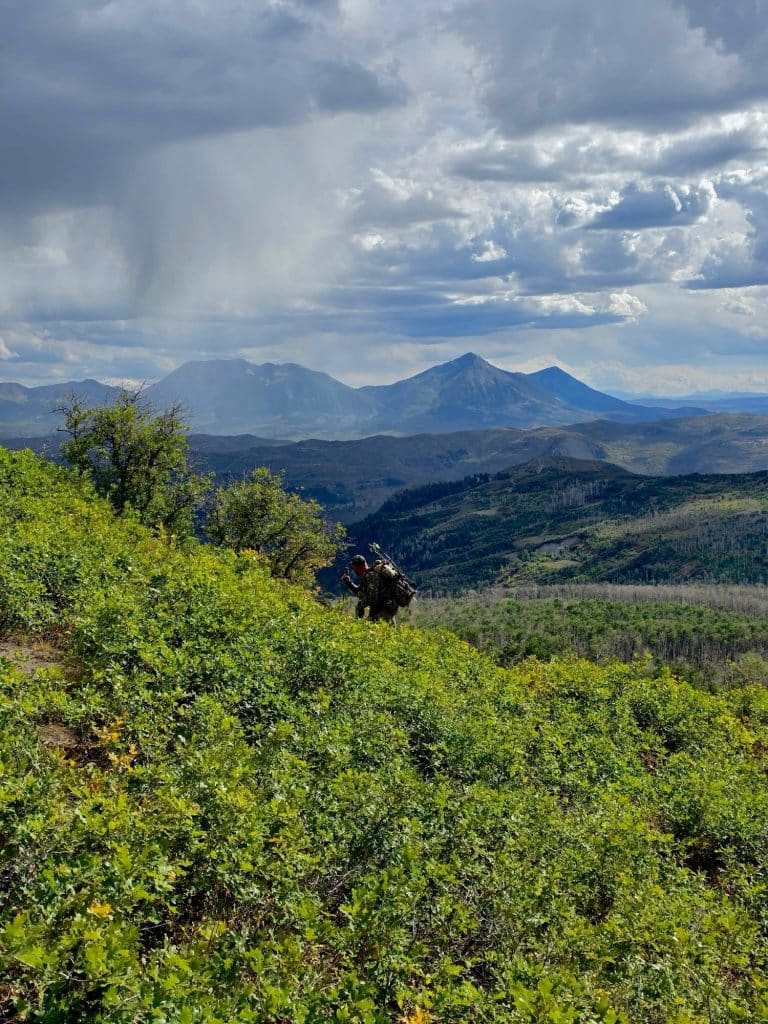
That bedded bull is the whole argument in one frame. He was down, dying or healing, and we’ll never know which — because we walked into him instead of waiting him out, and we walked in because the weather took waiting off the table. Every option was bad. That part never makes the podcast.
Why Elk Don’t Bleed Like Deer
Two of the three we lost were fifteen-yard broadside hits that barely bled. If you’ve only hunted whitetails that sounds impossible. It isn’t:
- Hide and hair pack into the wound channel like insulation stuffed in a gap.
- Muscle shift. Those slabs over the ribs slide across the entry hole and close it. Guys open up elk with an entry they can barely find and a chest cavity full of blood that never made it out.
- No exit, no trail. An arrow that stops inside is a plugged hole. On elk, a pass-through isn’t a nice-to-have.
- Clotting. Trackers with decades on the ground point to clotting as the main reason blood trails dry up so fast. Exactly what happened to our bedded bull.
- Body mass. A mature bull pushes 700–900 pounds per Colorado Parks and Wildlife. That’s a lot of blood between a hole and a dead animal.
So when a guy says he made a great shot and there was no blood — he might be lying. He might also just be describing elk hunting.
The Numbers Nobody Quotes Correctly
Agencies aren’t shocked by any of this. They budget for it. Colorado’s biologists use starting-point figures of about 25% for cow elk and 15% for bulls and calves when estimating what share of a herd gets hit and never found. Those aren’t accusations. They’re assumptions baked into tag allocation.
Controlled archery research is all over the map and almost all whitetail. Camp Ripley found bowhunters retrieved about 87% of deer reported hit. A 30-year Maryland dataset landed near 85%. Other studies out of Georgia, Texas, and Indiana reported non-recovery approaching 50% — though researchers note most of those animals survived their wounds.
Two honest takeaways. “Wounded” and “killed and wasted” are different categories, and blurring them is how bad-faith arguments get built in both directions. And whitetail numbers don’t transfer to a 700-pound animal in blowdown at 10,000 feet. Nobody has good elk data. Anyone who claims they do is selling something.
Both Sides, Full Strength
We have a problem and we’re hiding from it. Three of six in one camp isn’t variance — that’s a system producing a bad outcome. Bows got faster and speed quietly stretched what people call an acceptable range. Rangefinders made 70 yards feel measurable, and measurable feels doable. Guys show up having shot twenty arrows in the driveway in August. Marginal angles get taken because the tag was expensive and the week is short. Stack enough small compromises and they show up as unrecovered animals. And we post the recoveries, never the five-day failures — so every new hunter builds their picture of this sport entirely out of the outcomes that went well.
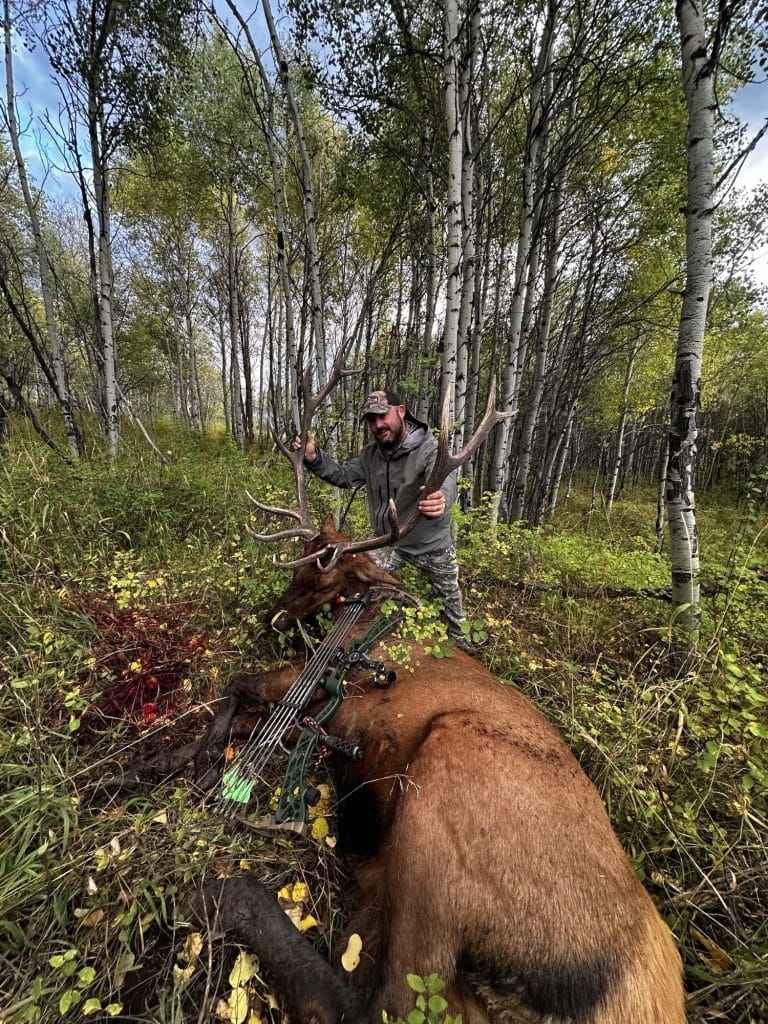
We’re too hard on ourselves. Recovery isn’t the same as ethics. My Hotchkiss cow took a textbook arrow through lung and bone and we still lost her. No gear change, no discipline lecture, no extra practice arrow turns that into a recovery. Judging a hunter by whether the meat reached the truck judges the outcome, not the decision. The stats get weaponized too — that 50% figure gets quoted as “half of all animals die in agony,” when the same research found most survived. And rifle hunters aren’t exempt. Anyone who’s spent real time in elk country has found animals carrying old broadheads and old bullets. We just don’t hold the same public reckoning over a shoulder hit at 500 yards.
Where I land: both. We’re taking shots we shouldn’t, and the fix is upstream of the blood trail. And some losses are simply unavoidable, and pretending otherwise pushes honest hunters into lying about their season. What I can’t stomach is the guy who’s never lost one. Either he’s shot three elk total, or he isn’t telling the truth.
What I Changed
- Moved my range in, not out. Not because I can’t hit far, but because the odds of nothing changing between release and impact fall off a cliff past 40 yards. Use a rangefinder to confirm you’re close enough, not to justify being far.
- Stopped chasing speed, started chasing penetration. Two holes or the trail doesn’t exist. Heavier arrow, weight up front, a head that holds together on bone — the full argument is in our best broadheads for elk guide. Confirm your setup clears your state’s minimum draw weight for elk while you’re at it. Those are floors, not targets.
- I wait longer and I don’t negotiate with myself about it. Ouray taught me the most expensive move in elk hunting is walking forward. Mark last blood. Back out. Let it die where it wants to.
- Rain is its own problem. Waiting costs evidence, pushing costs the animal. Now I send one person up the trail slow and put two on high ground glassing, so if he stands we watch him go instead of guessing.
- Second arrow every time it’s offered. Ego has cost more elk than bad shooting.

Building around penetration this year? Our broadheads and archery gear are stocked ahead of September.
Frequently Asked Questions
How long should you wait before tracking a wounded elk?
Confident double-lung, 30–45 minutes. Anything questionable — liver, single lung, a hit you couldn’t call — four to six hours minimum, gut shots overnight where temperature and predators allow. Waiting risks spoilage. Pushing risks the animal. In elk country, pushing is the bigger risk almost every time.
Why is there no blood after a good shot on an elk?
Usually one of three: no pass-through so blood pools internally, thick hide and shifting shoulder muscle sealed the entry, or the wound clotted before the animal went far. The pass-through is the one you actually control.
Does a wounded elk always die?
No — and it’s the most misunderstood part of this whole conversation. Research on archery-wounded deer consistently finds most survive. Elk turn up alive and healthy carrying old broadheads and bullets. A lost animal is a real failure. It is not automatically a dead one.
Alright — Tell Me Where I’m Wrong
I’ve given you my three worst. Now I want yours, and I want the real version.
Answer one, or answer all three:
- What’s your actual number of wounded elk — not the one you give at the trailhead?
- Rain is washing your only blood off the leaves. Do you sit, or do you go? Defend it.
- Is 3-of-6 in one camp a gear-and-discipline failure, or is that just elk hunting? Pick a side.
Comments are open below, and the Final Stalk forum is where it can turn into a real argument instead of a comment thread. Come swing. I’d rather read fifty people telling me I’m wrong than one more highlight reel — and somebody reading this in September is going to make a better decision at full draw because you took the time to type it out.
Heading into the elk woods this fall? Our bow hunting elk tips and the four R’s of an ethical hunter are both worth twenty minutes before you’re standing there deciding whether it’s a shot.
About the author
Josh Riley is a cofounder of Final Stalk and a hunting guide in Colorado’s Rocky Mountains, where he has guided for seven years and spends more than 50 days a season in elk country. What he writes here comes from what he has watched work and fail on the mountain — his own hunts, his clients’ hunts, and the ones that ended without an animal.







Leave a Reply