
An elk can hear a bad note from half a mile away — and he votes with his feet.
I guide elk hunters in Colorado’s backcountry every September, and I’ve watched one squeaky bugle empty an entire drainage. I’ve also watched a well-timed cow mew walk a screaming herd bull into 30 yards. After years of running these calls on real bulls, the Rocky Mountain Bully Bull Extreme is the bugle tube on my hip every September, Rocky Mountain diaphragms are the daily drivers in my pack, and nearly every call on this list — the Primos Terminator, Hoochie Pack, Voo Doo, and the whole Rocky Mountain diaphragm wall — now ships straight from our shelves at Final Stalk.
But the right call depends on your skill level and the conversation you’re trying to have with that bull. Here’s what actually gets answered.
Having The Right Tools: Elk Calls
My Dad used to tell me to always have the right tool for the job, and elk calls are some of the most valuable tools in a hunter’s kit.
Making the right calls at the right moment is a hallmark of an experienced bowhunter. Mastering this skill is exhilarating, and there are few better feelings than calling a screaming bull elk into your range. Having the right elk call makes this all possible.
At a minimum, I carry a bugle tube and a few cow calls with me when bowhunting. Everyone’s setup will be different, but the ability to make well-placed bugles, cow mews, and chirps are all critical skills depending on the situation. If you’re still learning what each sound means, start with our guide to decoding elk sounds — then come back and pick your tools.
Let’s dive in.
Best Elk Bugle Calls
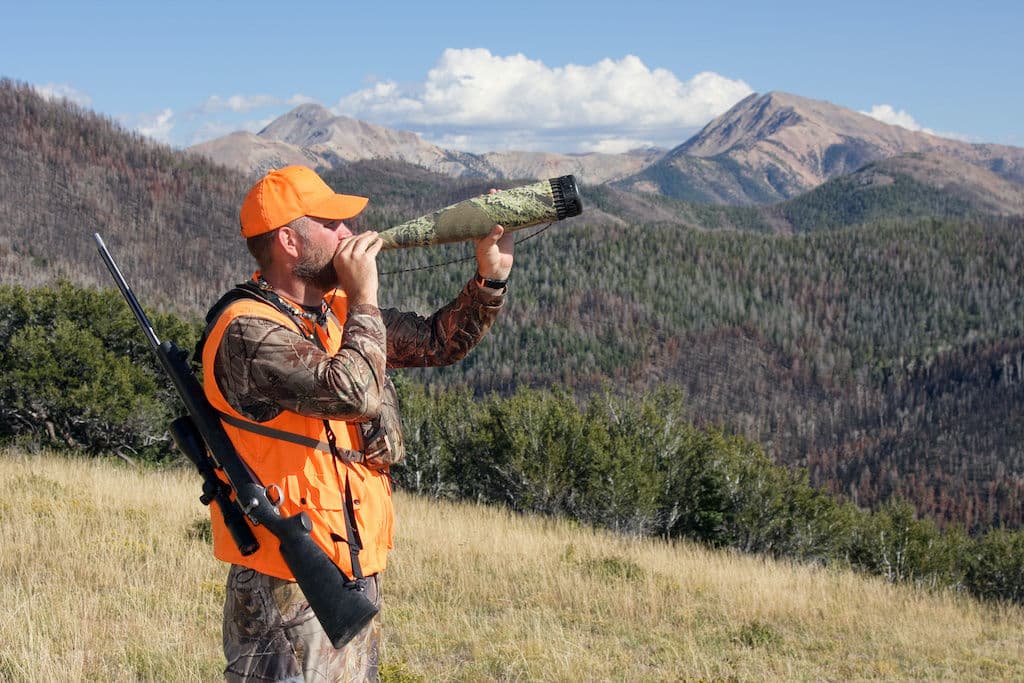
Rocky Mountain Bully Bull Extreme Bugle

That’s my tube, my leg, and about ten minutes before the sky opened up on us. The Bully Bull Extreme is what I reach for first when I need to find a bull, and it’s the one I hand hunters who keep blowing flat, airy bugles and can’t work out why.
The reason is back pressure. The barrel meters your air into an even flow instead of letting it dump straight out the end, and that even flow is what lets you climb through the octaves without the note cracking into a squeal at the top. Guys who can’t hit a high note usually don’t have a lung problem — they have a tube problem. It runs off a diaphragm rather than a built-in reed, so pair it with the GTP reeds further down this list and you’ve got the exact setup I carry.
It ships with a camo cover and a lanyard, which sounds like a throwaway detail until you’ve had a bare tube flash sunlight at a bull across an open park. The tradeoff is size: this is a full-length grunt tube, not something that disappears into a bino harness. And volume is a tool, not a strategy — on pressured public land I’ll locate with it once and then shut up, which is a whole argument I made in Is Calling Dead on Public Land?
- Pros: Even back pressure makes octave changes dramatically easier; real volume for locating across drainages; camo cover and lanyard included
- Cons: Full-length tube that eats pack space, and it needs a diaphragm to run — not an all-in-one
Primos Terminator Elk Bugle

The Terminator has been putting bulls on the ground since before some of the boutique call companies existed, and there’s a reason it never left the shelves: the resonator end duplicates an elk’s voice chamber for those accurate nasal tones, and the patented Support Shelf mouthpiece holds the reed steady so your bugle doesn’t crack mid-scream.
This is the tube we stock for hunters who want a proven, full-size bugle without hunting down a boutique brand — and when the latex finally gives out, the snap-on silicone replacement reeds ($9.99) are on our shelf too. Silicone won’t rot like latex, so a spare in your pack lasts for seasons.
- Pros: Time-tested design, accurate nasal tone, cheap snap-on replacement reeds we also stock
- Cons: The least refined tone of the tubes here — it’s a workhorse, not a boutique call
Primos Slide Bugle
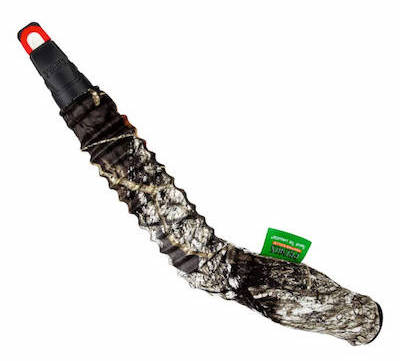
That’s it; I’m officially switching to one of these all-in-one bugle tubes full-time. Don’t laugh. It’s lightweight and compact, and I don’t have to have a reed in my mouth constantly. This is helpful if you are a guide or hunting in a group, which describes most of my hunts.
Many hunters make fun of these tiny tubes, but you shouldn’t sleep on this call. Last year while 20+ hunters were blowing their giant grunt tubes on the mountain with no luck, I was able to call in several bulls with this exact Primos Bugle.
I was able to control my bugle’s pitch, volume, and direction well, which turned out to be the difference-maker. Sometimes the bigger tubes will bounce sound off the mountains all around, making bulls confused about the direction the bugle came from.
- Pros: All-in-one design, separate diaphragms make a wide range of elk noises, expandable from 13 to 20 inches
- Cons: Primos has discontinued it — stock is drying up
2026 update: Primos has discontinued the Slide Bugle, and retail stock is gone. The good news: we stock the same all-in-one concept — the Rocky Mountain Wapiti Whacker ($59.99) makes every elk sound from cow talk to the high-pitched screaming challenge without a separate diaphragm in your mouth. That’s the one to grab if the Slide Bugle’s no-reed convenience is what sold you.
Best Elk Diaphragm Calls
Here is a little rundown on how to use diaphragm or mouth reed calls if you are new to the game:
Rocky Mountain Hunting Calls GTP Diaphragms
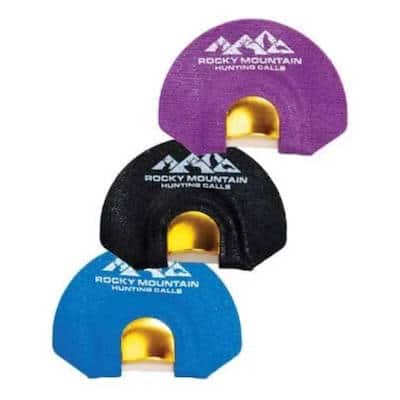
Rocky Mountain Hunting Calls, in my opinion, make the best diaphragms in the business. This is the brand that I’ve been running for several years now, and I can’t complain. I know I will have them in my archery pack this fall — and now they live on our shelves at Final Stalk, so you can grab the exact reeds I run.
The latex wears out on these after a little while, so grab two or three, so you have some for practice and some for the field. The GTP 3-pack ($27.99) is the smart buy; singles run $10.99.
- #134 Black Magic – Good for frustrated bugle calls, cow and calf chirps, and mews
- #135 Spellbound – Suitable for very aggressive bugles and estrus whines from cows
- #101 Raging Bull – When you need to sound like the biggest, angriest bull on the mountain
Primos Elk Select Mouth Calls 4-Pack
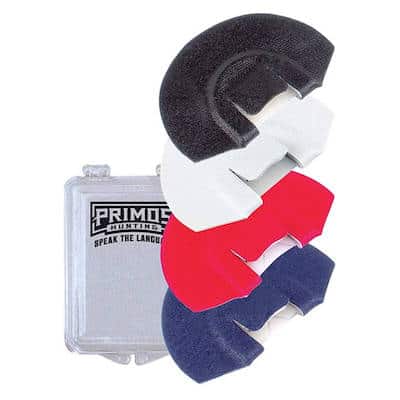
Making the right call at the right time can be difficult, so having a variety of diaphragms that produce various noises is critical for any hunting strategy. This pack from the trusted Primos brand comes with four unique diaphragm calls and offers lots of range.
These calls are great for beginners, as they don’t wear out very quickly when practicing. Just make sure to buy some earplugs for anyone living under the same roof as you.
- Sentry Plate – Set at 16 degrees, this sound plate is perfect for cow, calf, and spike bull calls
- Ivory Plate – Set at 30 degrees, this sound plate makes cow, calf, and satellite bull calls
- Imperial Plate Double – Same as the ivory plate but with a double reed for a more robust sound
- Hyper Plate Double – Double reed call with a y-shape cut in one reed, making for an excellent estrus call or a huge herd bull
Rocky Mountain Hunting Calls TST 2.0 Series

Rocky Mountain retired their old C-series lineup and replaced it with the TST 2.0 series — same beginner-friendly philosophy, updated Tone Stability Technology latex. If a buddy recommended the old C1 All-Star or C4 Champ, this is where those calls went.
These are best for newer hunters trying to make easy cow sounds or who are newer to bugling. They’re easy to use but require a little practice to sound right. Protip: elk101.com has detailed instructions on running Rocky Mountain diaphragms.
- TST 2.0 3-Pack ($27.99) – The full spread of cow talk and bugles in one pack
- Champ 2.0 – The updated version of the classic screaming-bull diaphragm
- Rock Star 2.0 – A TST-series favorite for full-range bugling
Phelps Game Calls Pitch Black Series 3-Pack
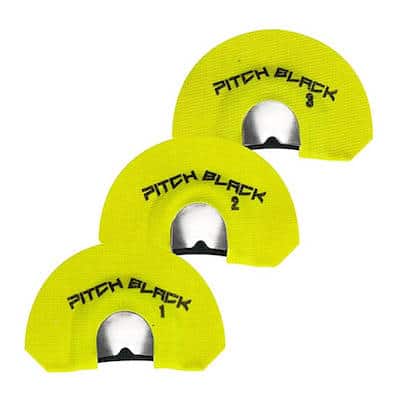
Many hunters I know swear by Phelps Pitch Black elk diaphragm calls. Because of their versatility and wide range of sound, they’re among the best elk calls in the world. Expert archery hunters regularly use these because they reliably produce elk language repeatedly.
Although they take quite a bit of practice to get used to, these reeds are not just for expert callers. If you are dedicated to your craft and willing to put in the work, you can’t go wrong with purchasing these, even if you are a novice. Just be prepared to practice (a lot).
- Pitch Black 1 – Loosely stretched latex makes for easy cow sounds
- Pitch Black 2 – Phelps brand “do-it-all” call. Medium stretch is perfect for cows and throaty bulls
- Pitch Black 3 – Latex is tightly stretched, making for perfect long-distance calls and cows in heat
Check Price At Phelps Check Price On Amazon
Best Cow Elk Calls
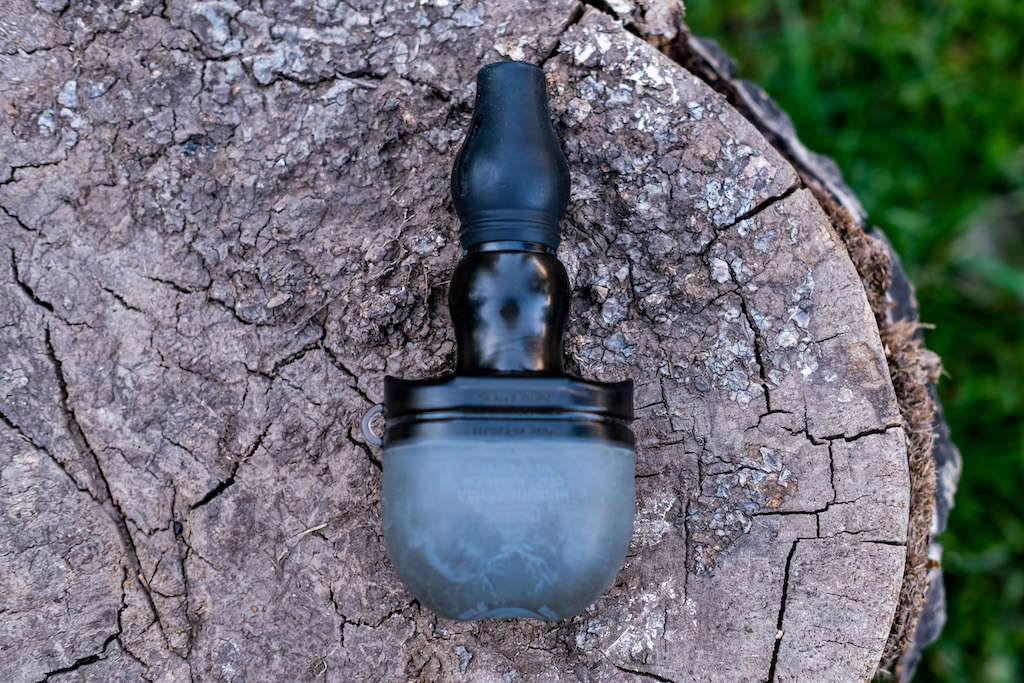
Primos “Imaka Da Bull Crazy” External Reed Call

I’ve owned several of these calls over the years and have used them to call in whole herds of elk. Primos has since consolidated the line — the Long Range model is the current version — but don’t let the name fool you: with a soft breath and a little mouth control, it still shines in those situations where you don’t want to call too loud and spook the herd. With practice, you can sound like multiple elk depending on how you blow on the reed or manipulate it with your mouth. This cow elk call is straightforward, and I recommend it for any skill level.
- Pros: Easy to use, durable design, lightweight, wide range
- Cons: The original short-range model is discontinued — the Long Range is the current version
Check Price At Optics Planet Check Price On Amazon
Primos Hoochie Pack Call
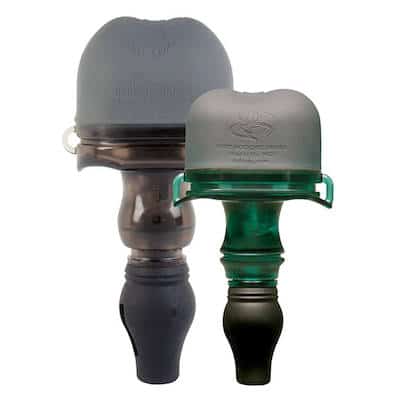
I love these Hoochie Mama calls from Primos. There’s no need to use your mouth with these, and you can create several different cow elk noises simultaneously with the 2-pack. This helps create “herd talk” as it allows the hunter to make calls with both hands and their mouth simultaneously by combining this pack with a Primos mouth diaphragm.
We stock the full Hoochie family: the two-call Hoochie Pack ($59.99), the standalone Hoochie Mama ($49.99), and the push-button Cow Hoochie Mama ($49.99) — the most foolproof cow call ever made.
- Pros: You use them with your hands, very easy to use
- Cons: Not much variance in the sound range
Rocky Mountain Voo Doo
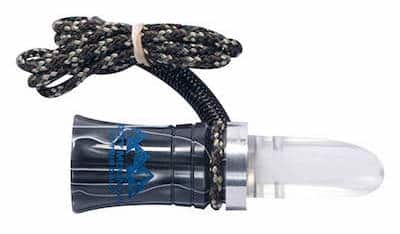
This cow elk call is perfect for anyone hunting during the rut. This external reed cow elk call makes perfect whiny estrus noises and is ideal for closing the gap between you and that stubborn and horny bull elk. It’s easy to use and has a unique sound, making it worthy of any hunting pack.
Rocky Mountain’s whole open-reed family is on our shelves: the estrus-scream Trophy Wife ($31.99), the nasally rut-machine Wild Thang ($43.99), and the ultra-compact Lil’ Flirt ($24.99) for subtle close-range chirps.
- Pros: Easy to use, unique estrus sounds, significant sound volume and tone
- Cons: Doesn’t make a wide range of cow noises
Phelps Game Calls EZEstrus

Phelps Game Calls claim that this is the best external reed game call they have ever made, and I have good reason to believe them. I own one and can not believe how stunningly rich the noise is from this cow call. It makes excellent nasally-type cow noises that make big bulls go bonkers. This elk call is as good as it gets.
- Pros: Crystal clear sound, perfect tone, long and short-range capabilities
- Cons: No cons – this cow elk call is excellent
Check Price At Phelps Check Price On Amazon
Primos Cow Girl

Thirteen bucks. That’s the whole pitch. The Cow Girl is a bite-and-blow call that slides from a high note to a low note the way a real cow does, and it’s the call we hand hunters who want cow talk in their pocket without learning a diaphragm first.
It won’t replace a full open-reed call for volume or range, but as a backup call — or a first call — it earns its spot at the price of a sandwich. Pair it with the Hyper Lip Double ($27.99) if you want a tone-converter step up without diaphragm practice.
- Pros: Cheapest real cow call going, dead simple, fits anywhere
- Cons: Limited volume for long-range work
Stock Your Pack At Final Stalk
Nearly everything on this list ships from our own shelves in Colorado — the Rocky Mountain diaphragm wall at $10.99 a reed, the full Primos Hoochie family, open-reed cow calls from $12.99 to $53.99, and replacement reeds so you never hit the mountain with worn latex. And if you’re hunting call-shy bulls, pair your setup with the Montana Decoy Miss September ($109.99) — a bull that hears a cow and then sees one commits all the way.
Shop All Elk Calls At Final Stalk
Frequently Asked Questions
What’s the easiest elk call for beginners?
Push-button and squeeze calls like the Primos Cow Hoochie Mama produce a perfect cow call with zero practice — you literally just push it. Bite-and-blow calls like the $12.99 Cow Girl are the next step up. Save diaphragms for when you’re ready to put in practice time; they offer the most realism but the steepest learning curve.
Do I need a bugle and a cow call?
Yes — they do different jobs. A bugle locates bulls and challenges them; cow calls close the distance and calm nervous elk. At minimum, I carry one bugle tube and two or three cow calls every September. Many September bulls that won’t come to a bugle will walk straight into a soft cow mew.
What’s the best bugle tube for elk?
The Rocky Mountain Bully Bull Extreme is the one I run and the one I’d hand a hunter who wants a single tube to do everything. Its back pressure makes octave changes far easier than a straight-barrel tube, which is what separates a bugle that sounds like a bull from one that sounds like a hunter. It does require a diaphragm; if you want an all-in-one with no reed in your mouth, the Rocky Mountain Wapiti Whacker is the better call.
When should I use a cow call vs. a bugle?
Bugle to locate — early morning, evenings, and ridgelines — and to challenge a herd bull that’s fired up. Switch to cow calls once a bull answers and you’re closing the gap, or anytime elk are call-shy from pressure. On heavily hunted public land, soft cow talk kills more bulls than screaming does.
How long do diaphragm calls last?
Latex diaphragms lose their tone after a season or two of heavy use — faster if you leave them in a hot truck. Store them in the fridge with the included case, and buy a 3-pack so you have fresh reeds for the field and worn ones for practice.
Which Elk Calls Will You Choose For Your Upcoming Hunt?

“How do you get to Carnegie Hall?”
“Practice, man, practice.”
The most important tip I can give you when choosing elk calls is that you’ll need plenty of practice no matter which calls you choose. If you decide to go with diaphragms, I recommend ordering two sets—one set for practice and one set for the field. I like to take mine in the car with me on the way to work so I don’t annoy everyone in my household, sounding like a wounded elk all day.
I hope that I’ve provided ample information to help you find the best elk calls for 2026 and beyond. If not, please reach out to me by leaving a comment below, emailing me, or visiting me in Ridgway, Colorado for the upcoming season! I’d love to hear your feedback.
Related Posts
- Elk Sounds: Decoding Bugles, Barks, Chuckles & More
- Is Calling Dead on Public Land?
- Bow Hunting Elk: 23 Tips from a DIY OTC Archery Hunter
- Best Elk Hunting Gear [51 Must-Haves + DIY Checklist]
- Broadheads for Elk: Tips, Reviews & Where to Buy
- Hunting Arrows: Top Carbon for Deer, Elk & More








Try deeptimbersounds.com Dominator Por Elk Call we been around for forty years. Out of Oregon.