
Reviewed By Murdock, Gear Tester, FinalStalk.com
Alright, you hardened sons of …. (and daughters, of course), Murdock here with a Zamberlan Salathe Trek review. For those who don’t know me, I’ve spent more years than I care to count putting my life, and more importantly, my feet, in the hands of issued and personally acquired gear.
From the sandbox to mountain peaks that’ll make your lungs burn just looking at ‘em, I’ve learned one thing: your boots are your life.
A bad pair can turn an outdoor adventure, a hunt, or even a pleasant day on the river into a special kind of hell. So, when the folks at Zamberlan sent over their Salathe GTX RR, claiming it was a “versatile, car-to-summit hiker,” my skepticism was, shall we say, healthy. Italian craftsmanship is one thing, but real-world, multi-disciplinary performance is another beast.
I’m here to tell you, after putting these boots through the wringer – from daily wear to the unforgiving backcountry of the Rockies on an elk hunt, and even navigating the slick, rock-strewn rivers of Virginia in pursuit of wily trout – the Zamberlan Salathe Trek’ GTX RR’s haven’t just met my expectations, it’s blown them clean out of the water.
Frankly, these might be the best all-around boots I’ve ever laced up. And believe me, that’s a statement I don’t make lightly.
First Impressions & The Daily Grind (Work)
Out of the box, the Salathe Trek’s scream quality. The Hydrobloc® suede leather upper feels robust yet supple, a far cry from some of the stiff, unforgiving “fortresses” I’ve had the displeasure of breaking in (or rather, having them break me in).
The to-the-toe lacing system, a feature I’m particularly fond of from my experience with approach shoes, allows for a truly dialed-in, custom fit. This isn’t just about comfort, ladies and gents; it’s about stability and control when the terrain gets dicey.
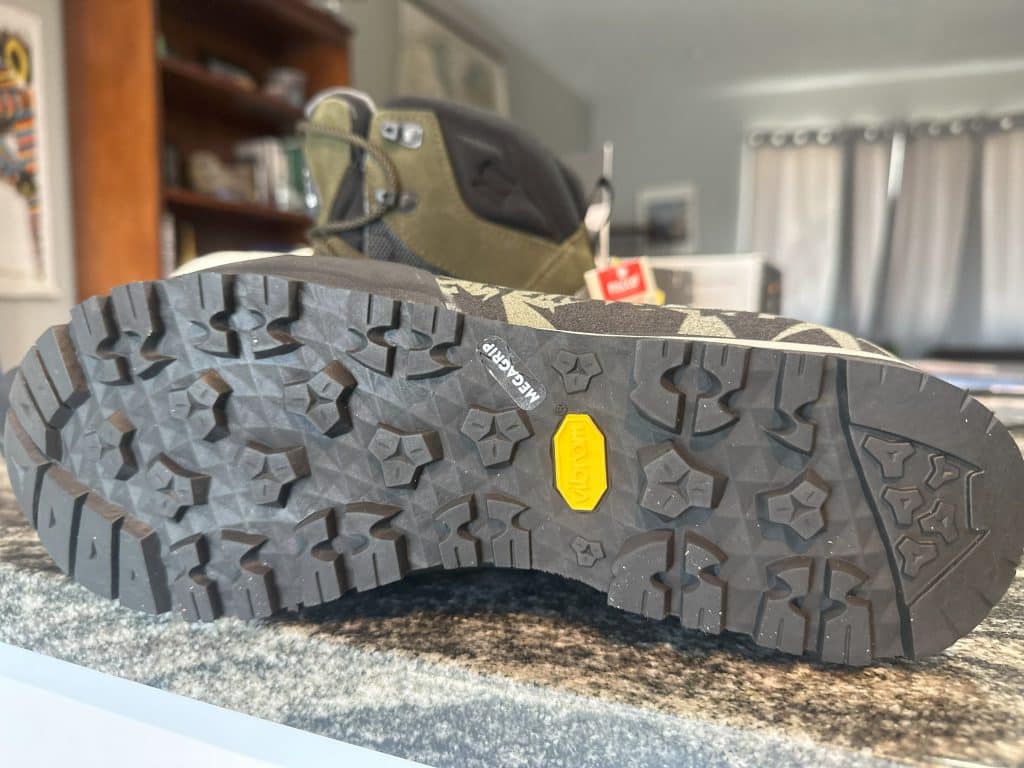
The Vibram® Pepe outsole, with its aggressive Megagrip® compound, looked ready to chew up whatever I threw at it.
I wore the Salathes as my daily work driver for the first couple of weeks. Now, my “work” isn’t your typical office gig. It involves a fair bit of rucking, range time, and generally being on my feet in varied conditions. My Zambo’s were comfortable from day one—minimal break-in was required, which is a godsend.
The GORE-TEX Performance Comfort lining kept my feet dry during a few unexpected downpours and, importantly, breathed well enough to prevent that dreaded swamp-foot feeling after a long day.
The support was there, akin to a lightweight hiker, but with a nimbleness that surprised me. They felt less like traditional clunky boots and more like an extension of my feet.
Good start, Zamberlan. Good start.
The Acid Test: Elk Hunting in the Rocky Mountains – Versatility Personified
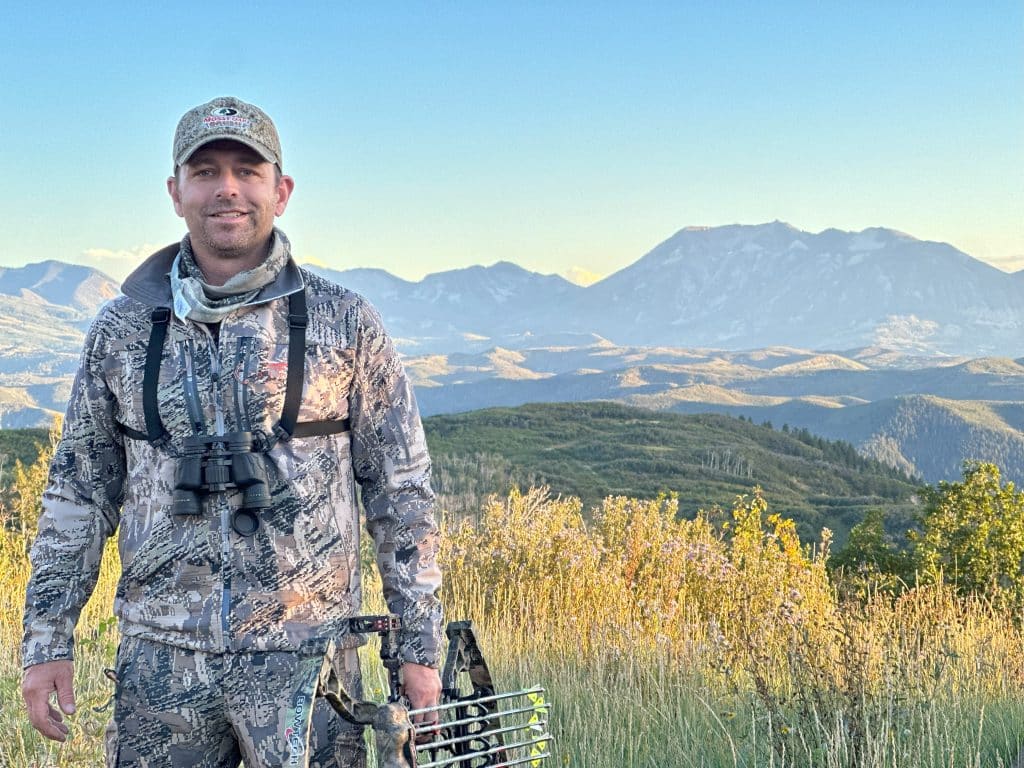
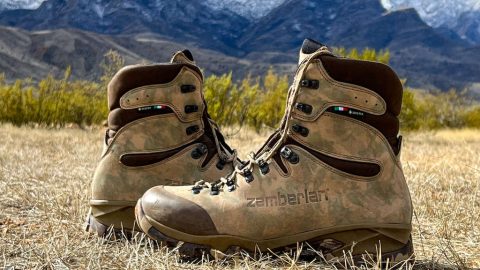
The real proving ground for any piece of mountain gear is the mountains. I took the Salathes on a late-season elk hunt in the Rockies – where the weather can turn on a dime and the terrain is designed to punish the ill-equipped.
We’re talking steep inclines littered with shale, boggy meadows, deadfall obstáculos, and the ever-present threat of snow at higher elevations. This is where the Salathe’s “versatility” claim would shine or shatter.
It shone. Brilliantly.
One of the first things that struck me was their climbing ability. The precise toe and sticky Vibram sole allowed me to navigate rock faces and scramble up loose scree fields confidently in a way I’d usually only expect from a dedicated approach shoe.
When side-hilling—a notorious ankle-roller of an activity—the mid-height cut and the secure lacing provided excellent support without restricting necessary movement. Even with a moderately heavy pack, I never felt like I was about to go over on an ankle.
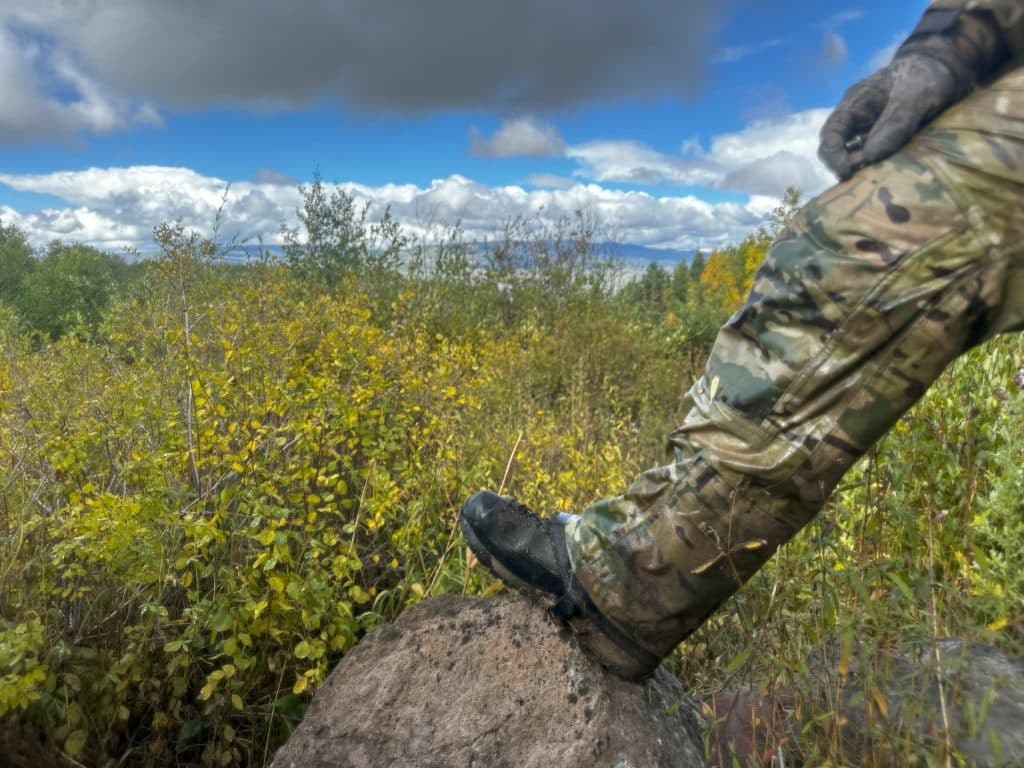
We covered serious miles daily, from pre-dawn glassing sessions on frosty ridges to afternoon stalks through dense timber. The boots handled it all. The Hydrobloc® suede, treated with Zamberlan’s proprietary waterproofing, shrugged off morning dew, creek crossings (shallow ones, mind you – these aren’t waders), and even a bit of early snowfall. My feet stayed dry and, crucially, warm.
While not heavily insulated, the quality construction and the GORE-TEX membrane provided enough protection for active hunting in shoulder-season mountain conditions. For deep winter, you’d want a dedicated insulated boot, but for the varied conditions of an early to mid-fall elk hunt, these were damn near perfect.
What truly amazed me was the lack of fatigue. Usually, after a few days of hauling ass up and down mountains in stiff hunting boots, my feet are barking. With the Salathes, while my legs knew they’d been working, my feet were remarkably fresh.
The EVA midsole provides excellent cushioning, absorbing the impact of each step on unforgiving ground. This isn’t just about comfort; it’s about endurance. The longer your feet are happy, the further and harder you can push.
From glassing on windswept ridges to picking my way silently through thickets of downfall, the Salathe GTX RR adapted. They were tough enough to protect, light enough to keep me agile, and grippy enough for whatever the Rockies threw my way.
Versatility? Confirmed. These boots redefined what I thought a pair could do in demanding, varied terrain.
Unexpected Finesse: Fly Fishing the Rivers of Virginia For My Zamberlan Salathe Review
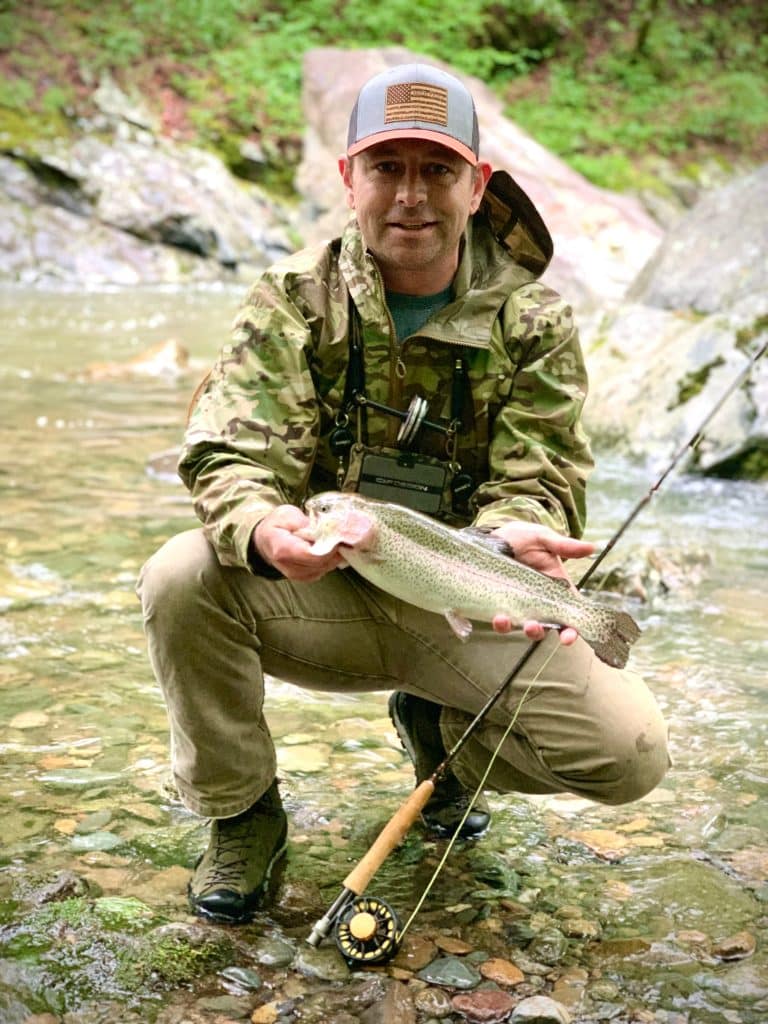
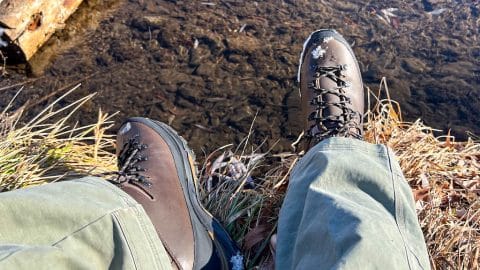
Now, you might be thinking, “Murdock, an elk hunting boot for fly fishing? Have you been into the camp whiskey?” And I wouldn’t blame you. Most wading boots are either clunky, heavy affairs or flimsy water shoes. I decided to give the Salathes a go while visiting family back East, chasing brown and rainbow trout in the clear, rocky rivers of Virginia. I wasn’t expecting miracles, but I was in for another surprise.
This is where the dexterity of the Salathe truly came to the forefront. Fly fishing in these rivers requires a good feel for the riverbed. You’re constantly adjusting your footing on slick, uneven rocks, and the ability to subtly shift your weight and feel what’s underfoot is paramount to staying upright and making a good presentation.
The Salathe’s relatively streamlined profile and the sensitivity of the Vibram sole allowed for a surprising amount of proprioception. I could feel the contours of the rocks and differentiate between a stable hold and a treacherous, algae-covered trap, all while the Megagrip compound did its best to keep me glued down.
Again, the to-the-toe lacing was a huge asset, allowing me to cinch the forefoot for a precise, almost climbing-shoe-like feel when I needed to rock-hop or navigate a tricky bank.
While not a perfect substitute for felt-soled wading boots on slick rocks, these boots excelled as versatile footwear for hiking to the river, navigating varied terrain, and performing well in the water with quick-drying pants. The rubber rand offered excellent toe protection.
The Salathe drained adequately and remained lightweight after wading. Ideal for anglers who hike, the surprisingly dextrous boots are a strong option.
Key Features That Make the Difference
- Hydrobloc® Suede Upper: Tough, water-resistant, and breaks in beautifully. It’s the perfect balance of durability and comfort.
- GORE-TEX Performance Comfort Lining: It does exactly what it says on the tin. It keeps you dry from the outside and manages moisture from the inside. It’s a proven performer.
- To-the-toe lacing is a game-changer for fit and adjustability. It allows for a level of precision that you can’t get with traditional lacing systems, enhancing both stability and dexterity.
- Vibram® Pepe Outsole with Megagrip®: Confidence-inspiring grip on a massive range of surfaces – rock, mud, loose trail, wet roots. It just sticks.
- EVA Midsole: Provides excellent cushioning without feeling mushy. It soaks up impact, reducing fatigue and allowing you to go further.
- Full Rubber Rand: This feature offers exceptional protection against abrasion in rocky environments, significantly increasing the boots’ lifespan.
- Zamberlan Craftsmanship: You can just feel the quality. These boots are built to last, with attention to detail evident in every stitch.
The Bottom Line On My Review Of The Zamberlan Salathe Trek GTX: My New Benchmark
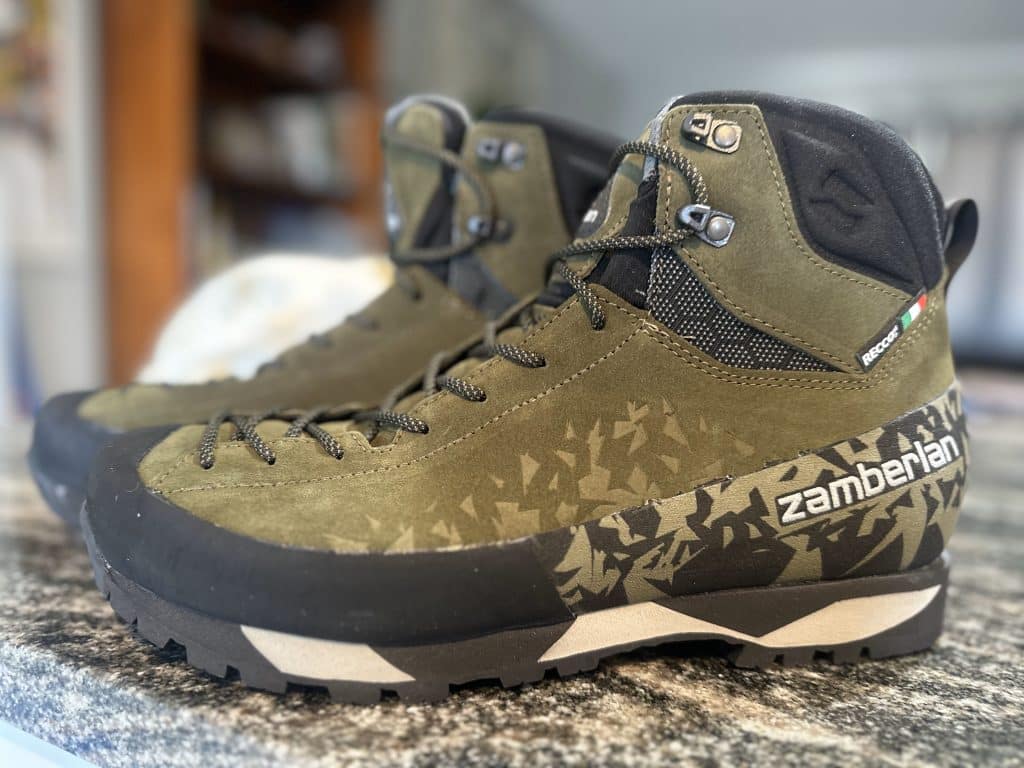
I’ve walked countless miles in countless boots. I’ve had good ones, bad ones, and many mediocre ones. The Zamberlan Salathe Trek reviewed well and honestly, sits in its own category.
It’s rare to find a boot that excels in one demanding discipline, let alone three as diverse as general work, high-alpine hunting, and technical river fishing.
The versatility is simply astounding. It’s a boot that feels as comfortable and capable of scaling a rocky outcrop in the high Rockies as it provides subtle feedback on a slippery Virginia riverbed. The dexterity, particularly for a boot this supportive, is a revelation.
Are they cheap? No. Quality rarely is. But the value proposition becomes crystal clear when you consider that the Salathe Trek GTX can effectively replace two, or even three, specialized pairs of boots in your arsenal. Less gear to buy, less to pack, and one boot you can trust implicitly across a staggering range of activities and environments.
For the serious outdoorsman, mountain hunter, adventurous angler, or military professional looking for a civilian boot that can keep pace with their demanding lifestyle, the Zamberlan Salathe Trek GTX RR gets my absolute highest recommendation.
They are, without a shadow of a doubt, the best, most versatile boots I have ever worn. Zamberlan has created not just a boot but also a new benchmark.
Murdock, out. Stay safe, and keep your powder dry.
Looking for the best socks to stuff in these boots? We made a list of the best hunting socks. Like always: tested and reviewed in the field.






Leave a Reply