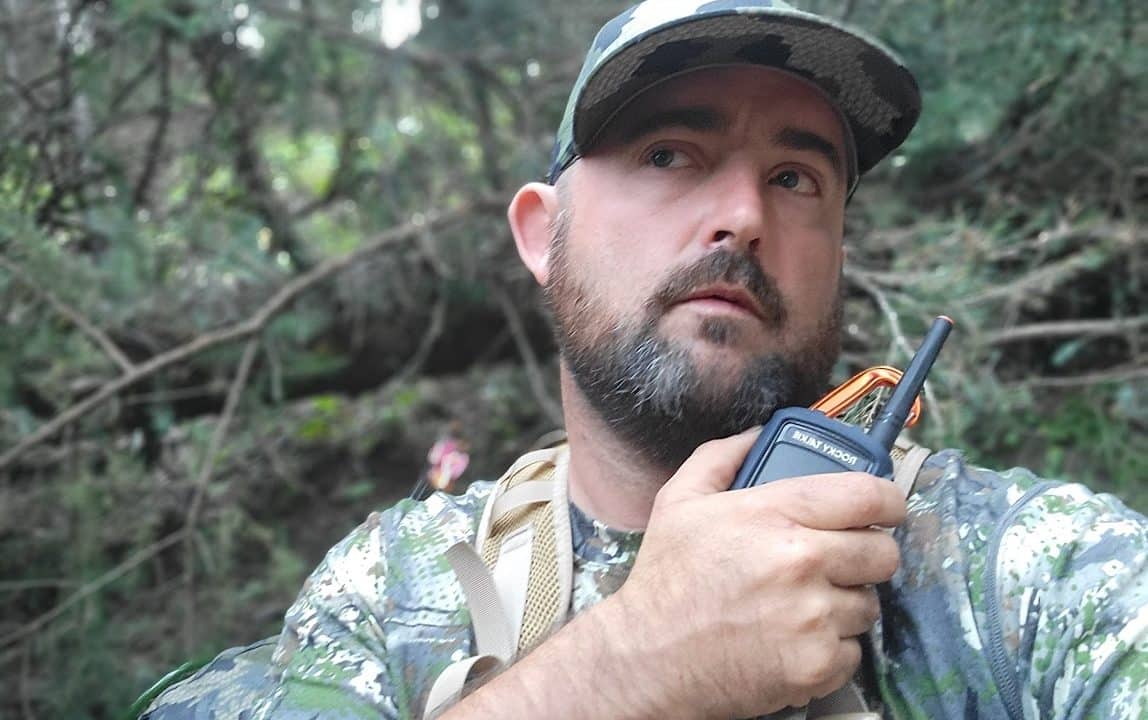

While searching for a new set of two-way radios for the 2024 hunting season, I came across Rocky Talkie, a small but growing Colorado company making an intriguing FRS radio for outdoorsmen. And since we at Final Stalk are also a small but growing Colorado company, I showed my support by outfitting myself and my hunting buddies with Rocky Talkies.
This all started after I’d spent a few hours geeking out over YouTube reviews of backcountry radios. I was impressed by the strong positive reviews of the Rocky Talkie, so I grabbed three of their compact, durable, and no-frills devices. They seemed exactly like what my hunting buddies and I needed for September’s bowhunting season.
So, with the elusive wapiti elk in mind, we put the Rocky Talkies through their paces in the San Juan Mountains of southern Colorado. Here’s my hands-on review after 30 days of heavy use in the field.
How We Tested Our Rocky Talkies
The three of us over at Final Stalk used the Rocky Talkies daily, clipped to our packs or belts for the entire stay. We didn’t always use them intensively, but I can testify that we beat them up big time.
Our campsite had very spotty cell service, so the Rocky Talkies served as our rock-solid form of communication when the hunting party split up to divide and conquer. No, we didn’t fill all of our tags, but at least we had some badass walkie-talkies along for the ride.
Features & Specs
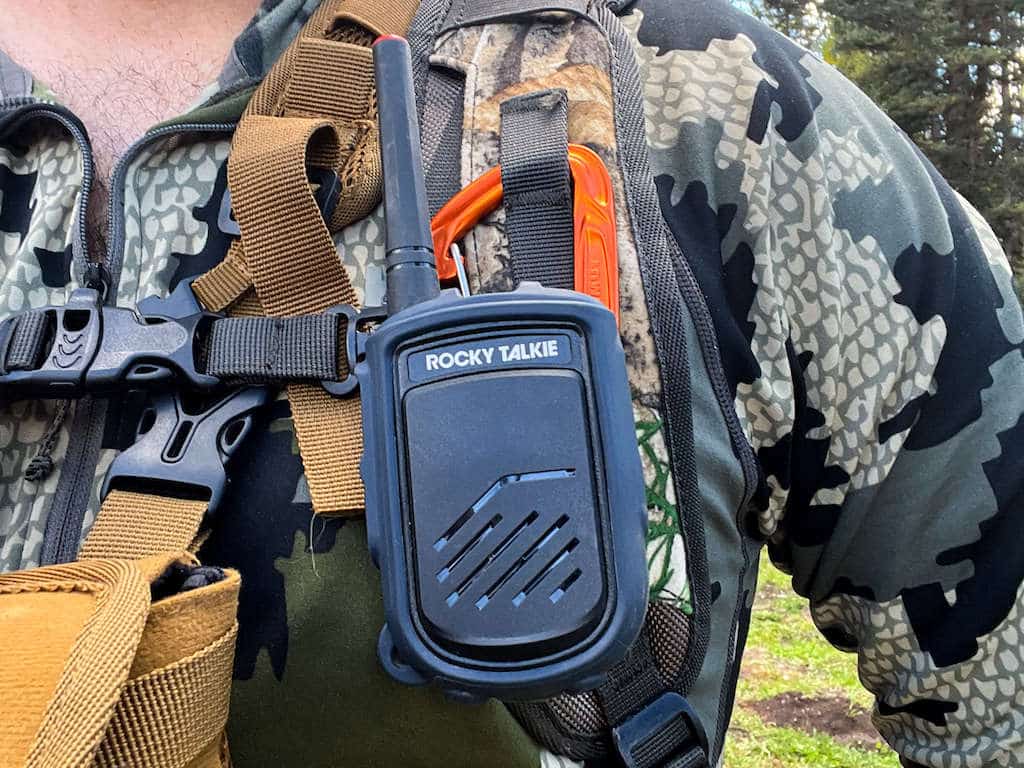
Let’s start by learning a bit about these versatile communicators:
FRS Capabilities
Rocky Talkies are license-free FRS radios that work straight out of the box, unlike GMRS radios, which require operators to purchase a license. GMRS radios are often more powerful and have a greater range than FRS, but they’re also bulkier and overkill for our style of hunting and other outdoor activities. FRS radios are more popular because they’re compact and geared towards recreational use.
128 Channels
With 128 FRS channels, finding a clear and uncrowded channel for backwoods communication won’t be difficult.
(Without getting too technical, know that channels 1-22 operate on standard FCC frequencies, and channels 23-128 are the same frequencies repeated and paired with privacy codes.)
During our hunting trip, Josh, Ryan, and I chose a single channel and it served us well for the entire 30 days. A couple of times we could faintly hear some chatter from other hunters on our channel, but they must have been far away. No problem.
1,550 mAh Lithium Ion USB-C Rechargeable Battery
Rocky Talkies have a 1,550 mAh (milliamp hours) internal lithium-ion battery, equivalent to four standard AAA batteries. For such a compact device, squeezing in a battery of that size is impressive.
This relatively high-capacity battery is rated to last a minimum of three days. We got a solid 6-7 days of performance out of these bad boys, but perhaps that’s because we kept our radio chat to a minimum so as not to spook the elk.
Another nice battery feature is that they’re USB-C rechargeable. There is no need to fumble with AAA batteries or plug your radio into a proprietary charging dock. We used a 12-volt car charger or a power bank to keep ours juiced up in the backcountry.
IP56 Weatherproofing
Rocky Talkie designed these two-way radios to be virtually impervious to dust, dirt, water, and other natural hazards, and their IP56 weatherproof rating reflects that.
Let me make sense of Rocky Talkie’s IP56 rating:
- IP = Ingress Protection
- The first number, 5, stands for its protection rating against solid objects like dust and dirt. The highest IP possible rating for solids is 6.
- The second number, 6, stands for its protection rating against moisture, such as rain, snow, and other precipitation. The highest IP possible rating for moisture is 9.
The bottom line is that this radio was engineered to withstand pretty much everything wet Mother Nature might throw at it.
Weight & Size
Each Rocky Talkie weighs in at only 4.8 ounces, or 7.9 ounces total with the included carabiner and backup leash. We trusted the carabiner and left the backup leash behind while hunting, and clipped the radio onto our backpack shoulder straps.
Rocky Talkies measure 6.4” x 2.3” x 1.1” and fit comfortably in the palm of your hand. They’re perfect for an ultralight backpacker like me. Less bulk = less weight. Considering its small size, the company packs a lot of range, battery life, and weather protection. We were glad because we avoid bulky, oversized gear at all costs.
Warranty
Each Rocky Talkie is protected by an industry-standard two-year warranty. The Rocky Talkie support team is responsive and prompt and genuinely wants your feedback. It’s clear they’re proud of their product and stand behind it.
Now that you’re up to speed on the Rocky Talkie’s basic specs and features let’s explore how it performed during our month in the field.
Range
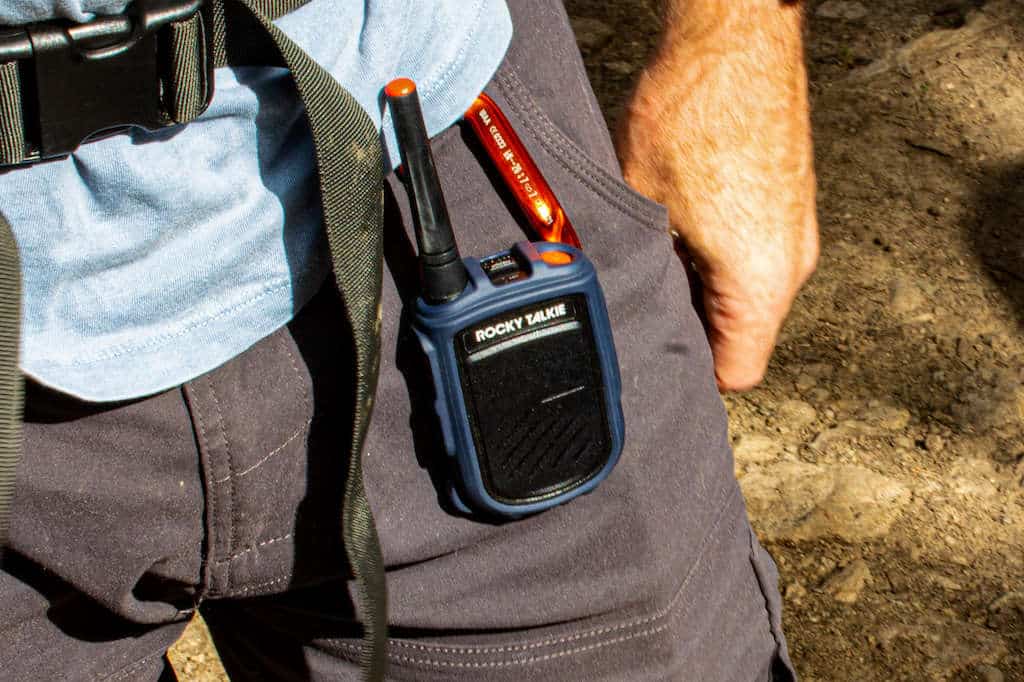
With a clear line of sight, this bad boy can transmit a radio signal up to 25 miles. But let’s be real: when do you ever have a 25-mile line of sight?
We tested this up to two miles into the thick backcountry and received a solid reception. The audio was sometimes a little grainy, but we could always communicate when needed.
This is a pro tip for all you hunters out there: disable the ‘Roger beep’ feature to remain silent and stealthy in the wilderness.
We doubt how clear the communication would have been if we bumped the range up to four or five miles. We never split up to hunt that far away from each other, though, so we’ll have to update you down the road if and when we push our Rocky Talkies to their limits.
I imagine mountaineering above treeline or hiking/climbing without any noticeable obstructions could put these range limits to the test. We plan on taking them up skiing when the snow starts to coat the Rocky Mountains, and we anticipate pushing their limits further. Stay tuned for updates.
Battery Life
Rocky Talkie conservatively rates their devices as delivering three days of battery life. Our experience with these bad boys was more like 6-7 days of talk time.
Of course, we didn’t talk a lot while hunting, and when we did, we whispered into the Rocky Talkie, using short sentences. Plus, we napped often or stared into the abyss, pondering life’s mysteries.
Had we been using our devices to communicate more frequently, I can see the battery life might have dropped closer to the company’s three-day rating. In a different scenario—say, each of us drifting on a lake, each in our own bass boats and nursing six-packs—our talk time would have been shorter!
One thing that was a bit of a head-scratcher was the Rocky Talkie’s battery display. For instance, one minute, it would read 30%, but a half-hour later, it would read 40%. We noticed minor display discrepancies like these a few times, but they didn’t affect the radios’ performance at all.
Durability
I have absolutely zero concerns about Rocky Talkies’ durability. We gave them quite a beating during our field tests, and they emerged completely unscathed.
We accidentally dropped them on rocks, smooshed them under the weight of heavy packs, slept on top of them, and let them slide around in the dirt of a Jeep full of smelly hunters and gear.
Take these anywhere you go, whenever you want, and they’ll stand up to all the usual hazards of backcountry hunting, and then some.
Weather Resistance
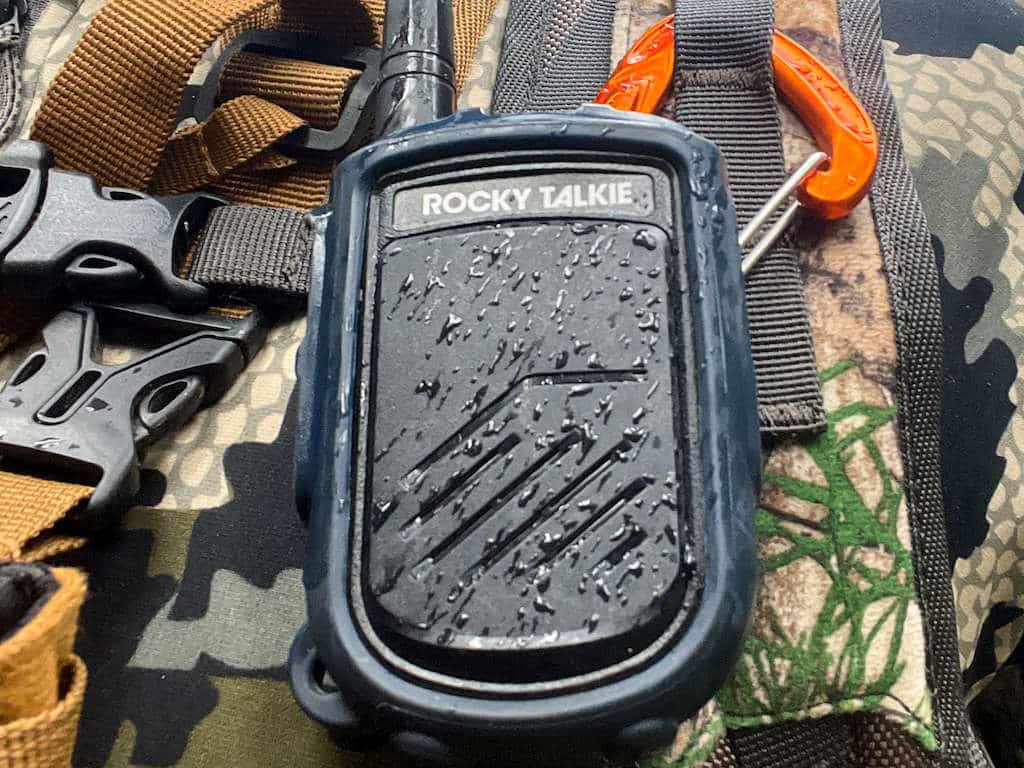
We mostly used our Rocky Talkies in warm and dry weather during our September elk hunt in Colorado. It never got down to the -20° F. rating mentioned in the specs, but we did have several days of heavy rain. The Rocky Talkies handled all of this in stride.
These buggers also endured their fair share of dust, dirt, mud, and muck and worked flawlessly. All we had to do was wipe them down after a hard day’s use.
What about snow, slush, sleet, and ice? We’re confident they’ll handle winter easily, but look for an update after we test them in the upcoming ski and snowboard season.
Value
At $110 per radio, Rocky Talkies land in the mid-to-high range of two-way FRS radios. Sure, you could be thrifty and spend $35 on entry-level Motorola T100 Walkabouts or shell out $400 a pop for the deluxe RDU4100s, but the Rocky Talkies are a much better value. Here’s why:
The T100 Walkabouts are very basic, and I doubt they’ll stand up to harsh weather, constant abuse, and the rugged Rocky Talkies. On the other hand, the high-end RDU4100s are rugged but overpriced and not as practical.
In short, if you hunt, hike, ski, or explore the outdoors with reckless abandon, investing in a set of Rocky Talkies is money well spent. Plain and simple.
Over & Out: Wrapping Up Our Rocky Talkie Review
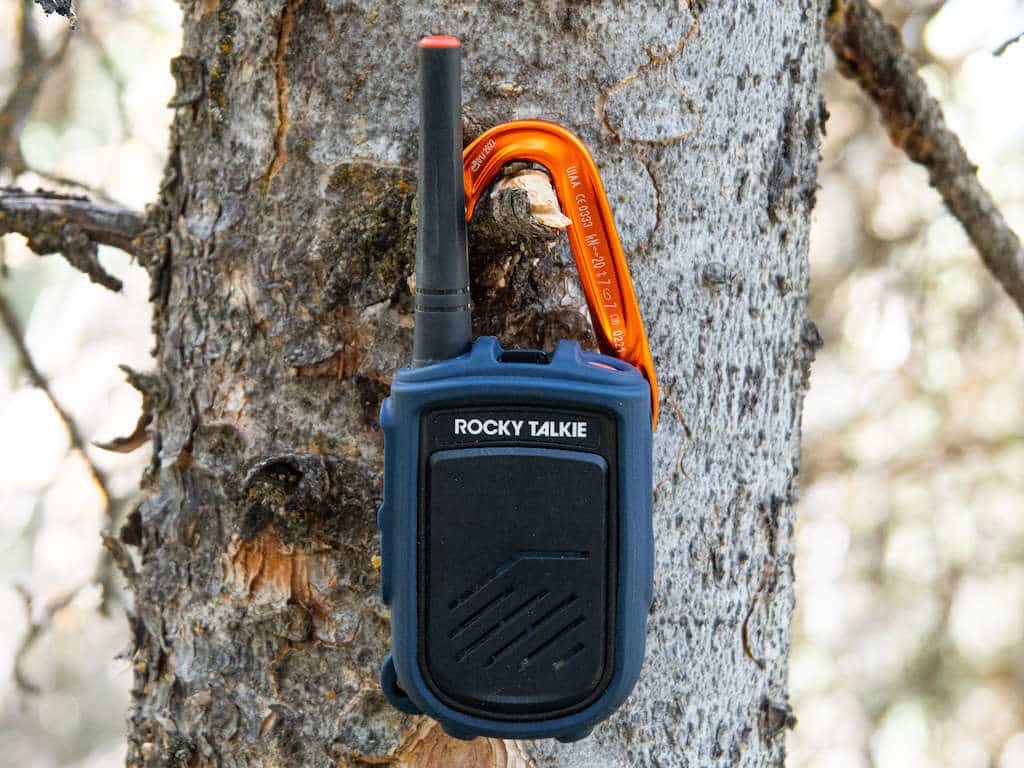
After putting our Rocky Talkies to the test during a month-long bowhunting trip in harsh conditions, the verdict of our top-to-bottom review is in:
Rocky Talkies are compact, reliable, and easy to use. They have insane battery life and respectable range and can survive a trip to hell and back. They did everything we asked of them, and we believe they’ll continue to do so for a long time.
Rocky Talkie is a small, growing Colorado company, and so are we. We feel that bond and take it as a sign that we were meant to be together… on the end of a carabiner.
Please feel free to comment below or email us any questions you have about Rocky Talkies. We have extensive experience with these radios and love chatting about our gear with the hunting and outdoor communities.






Leave a Reply