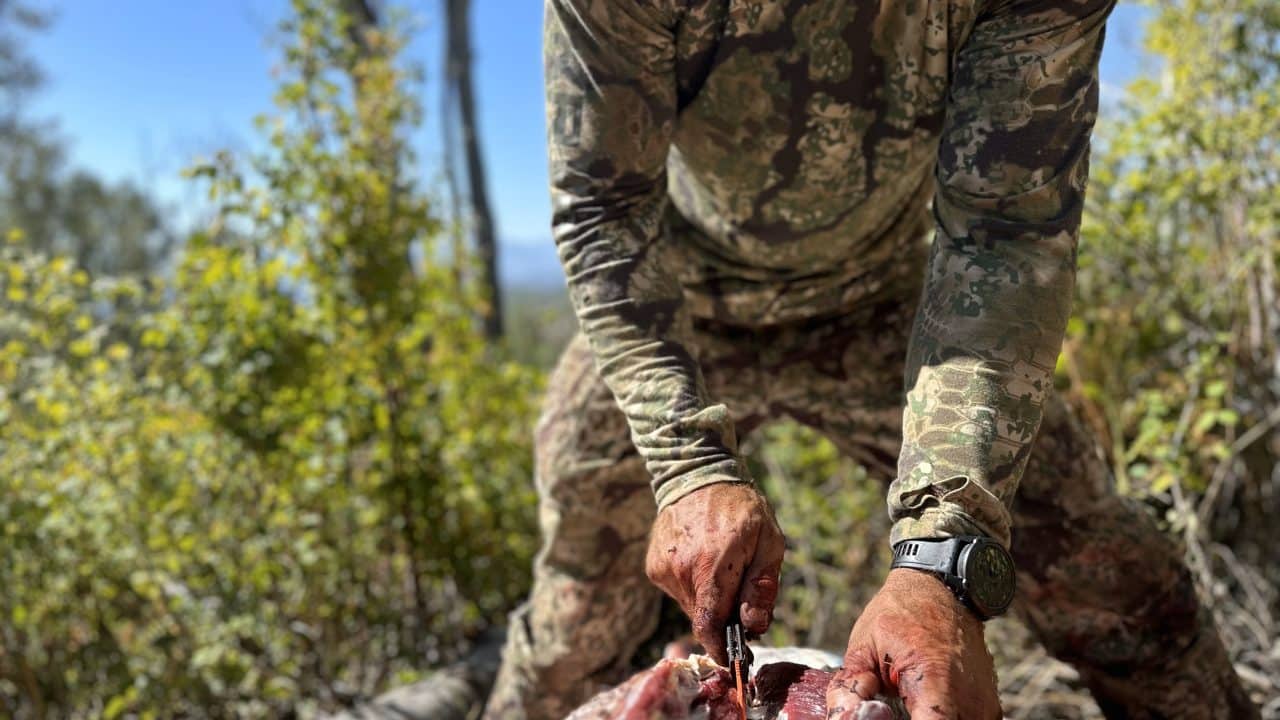
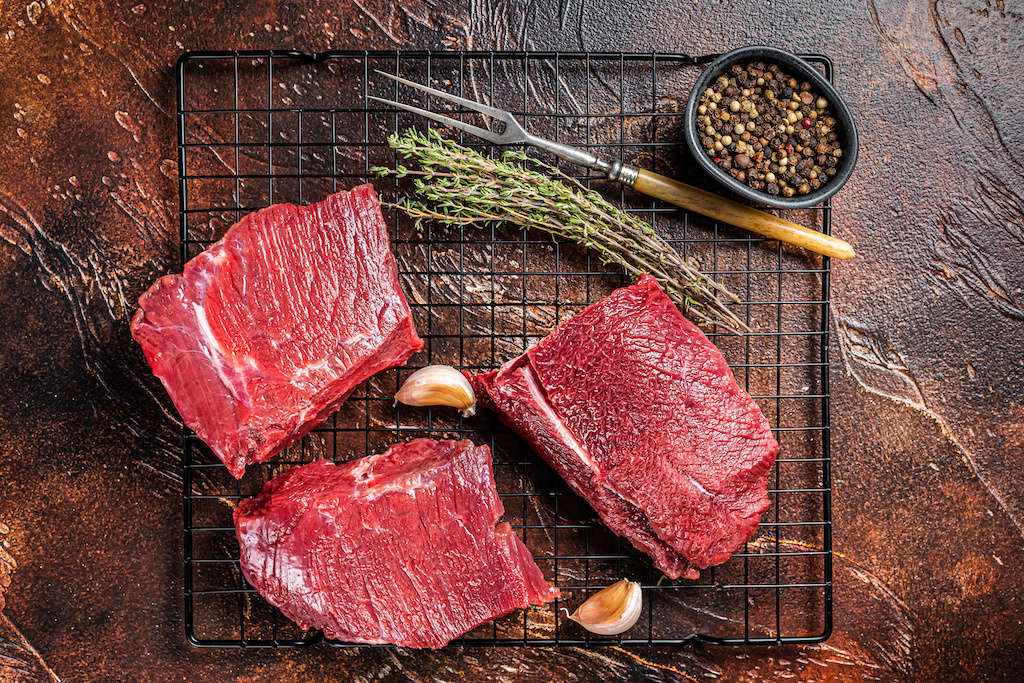
If you’re wondering how much meat you’ll get from an elk, you’ve come to the right place, my friend. FinalStalk is here to show you how much of the good stuff you can expect from your next harvest.
Whether you’re a new hunter trying to figure out how much weight you’ll need to pack out of the backcountry or want to know that your meat processor isn’t skimming off the top, we’ve got you covered.
I’ll include hanging weight, meat-on-bone weight (MOB), and de-boned weight. To top it all off, I’ll give some good ballpark figures for processed weight. (You know, the stuff you can eat!)
Lastly, I broke the information down further because not all elk are alike. Depending on what subspecies you’re after, Rocky Mountain, Roosevelt, or Tule Elk will yield different amounts of meat.
Take this information with a grain of salt — you can expect no one-size-fits-all meat yield. Use this info as a general guideline instead.
Note: For this article, we’ll assume the weight for all four quarters, the backstraps, tenderloins, neck, rib, and brisket. If you’re toting out a head, horns, and cape, expect to carry out an extra 50-100 pounds of weight.
How Much Meat from a Bull Elk (Rocky Mountain)
- Average Bull Size: 600 – 900 lb
- Hanging Weight: 300 – 400 lb
- De-boned Weight: 200 – 280 lb
- Processed Meat: 180 – 240 lb
Cow and Spike Elk (Rocky Mountain)
- Average Cow Size: 450 – 550 lb
- Hanging Weight: 250 – 325 lb
- De-boned Weight: 140 – 200 lb
- Processed Meat: 120 – 180 lb
Bull Elk (Roosevelt)
- Average Bull Size: 700 -1100 lb
- Hanging Weight: 350 – 550 lb
- De-boned Weight: 250 – 330 lb
- Processed Meat: 220 – 300 lb
Cow and Spike Elk (Roosevelt)
- Average Cow Size: 575 – 625 lb
- Hanging Weight: 270 – 370 lb
- De-boned Weight: 170 – 220 lb
- Processed Meat: 140 – 190 lb
Bull Elk (Tule)
- Average Bull Size: 450 – 700 lb
- Hanging Weight: 250 – 350 lb
- De-boned Weight: 150 – 200 lb
- Processed Meat: 100 – 170 lb
Cow and Spike Elk (Tule)
- Average Cow Size: 375 – 425 lb
- Hanging Weight: 150 – 220 lb
- De-boned Weight: 60 – 120 lb
- Processed Meat: 50 – 100 lb
How We Determined the Amount of Meat From an Elk
I’ve chased elk through Colorado’s Rocky Mountains for over 20 years. I’ve harvested everything from cows and calves to spikes and bulls. After all these years, I’ve learned a lot about how much meat I can expect from an animal. The key lies in how big the live animal is.
A University of Wyoming study in 1973 concluded that you could expect to pack out about half the animal’s live weight from a bull elk if you factor in all the bone-in meat.
The study also concluded that you could expect 35% of the live animal’s weight back in bone-in quality cuts. Since most don’t do bone-in cuts with elk, you can expect to lower that number to roughly 30%.
Again, there are a lot of variables. Other variables are whether you keep the bone-in shanks and organs, such as the heart and liver. If you keep these elk parts, expect your total harvest weight to increase in proportion.
So, How Much Meat Can I Expect from My Harvest?

We created FinalStalk.com because we’re passionate about hunting, nature, and the bounty they bring. I hope we’ve given you a better idea of how much usable elk meat you can expect from your next successful harvest.
If you’re chasing Tule through the Sierra Nevadas, stalking Roosevelt’s on the Oregon coast, or taking down a monster Rocky Mountain Elk in Montana, you’ll know what to expect.
If you can’t take down an elk in the field this season or are simply looking to try the meat, there are fantastic options for purchasing elk meat online and delivering it fresh to your doorstep.
So, if you want to stop thinking about yield and just want to taste some delicious elk steaks, head over to our friends at The Honest Bison. They’re our favorite sustainably sourced meat supplier.
Thanks for stopping by!






Leave a Reply