A comparison of elk vs moose usually ends up with a discussion about their color, sizes, and antler shape. To dig deeper, let’s talk about where these animals live, what they eat, and most importantly, how they taste.
In the Light Brown Corner: Elk

What do Elk Look Like?
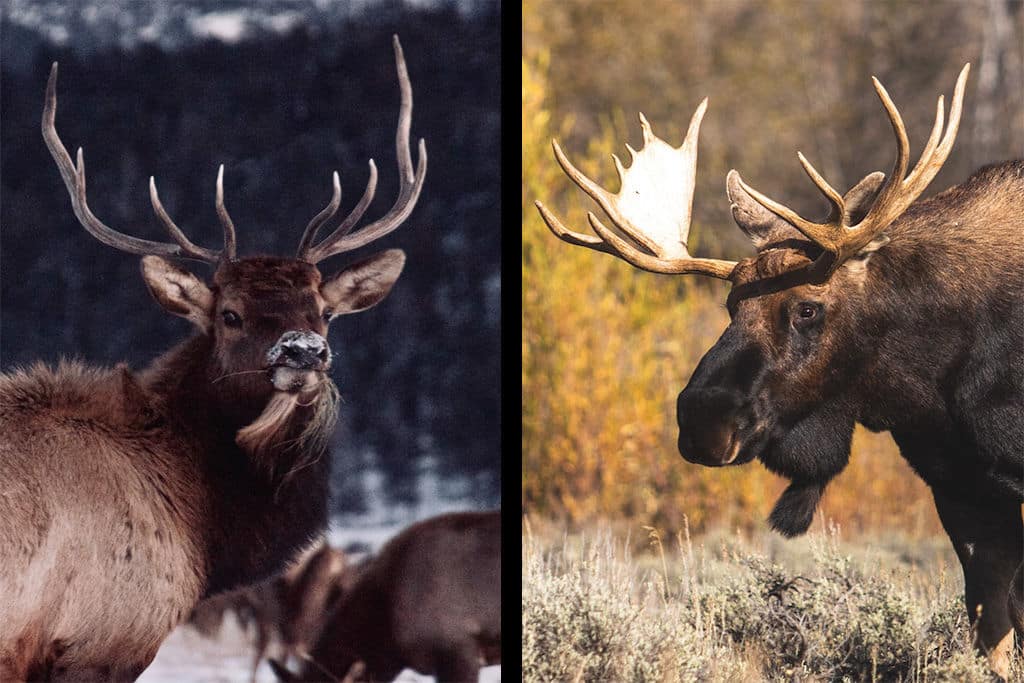
Visually, elk have features that set them apart from moose in a few distinct ways. For starters, they’re a lighter shade of brown that can have reddish undertones. Plus, their snouts are much more angled and sharp when compared to the curved snout of a moose. Their most striking visual differences stem from their antlers.
Elk’s antlers are sharp and pointed compared to moose antlers’ more rounded and flat shape. If it’s winter, though, neither animal will have its antlers, so it can be difficult to know which one you’re looking at. A quick way to tell if you’re looking at an elk is this: moose have a “bell” that dangles from their throats. It’s a large flap of skin that elk don’t have.
In terms of size, an adult bull elk can grow up to 1,100 pounds, but it’s much more likely that you’ll see examples of elks in the 700-pound range. At their shoulder, they can reach nearly five feet tall.
Where Elk Can be Found
Elk live in rugged mountain meadows, coastal forests, and open woodlands.
When searching for elk in the US, prominent populations can be found mainly in Washington, Oregon, California, Montana, Idaho, Wyoming, Nevada, Colorado, Utah, Arizona, and New Mexico.
Significant elk populations outside the US can be found in Canada, New Zealand, Australia, Chile, Argentina, Russia, China, Mongolia, and other Eastern Asian countries.
An Elk’s Typical Diet
Wild elk, classified as ‘grazers,’ tend to roam large areas — up to 500 square miles per adult — in pursuit of fresh grasses and foibles (weeds), their primary source of calories. However, they aren’t picky eaters and will also eat shrubs, bark, and tips of tree branches if the mood strikes.
Farm-raised elk, usually pasture-raised, are offered a similar diet to that they would consume in the wild but are also given alfalfa, grains, and other neutral-flavored feed. Doing so helps balance out the naturally gamey flavor of the elk’s meat.
What Does Elk Meat Taste Like?
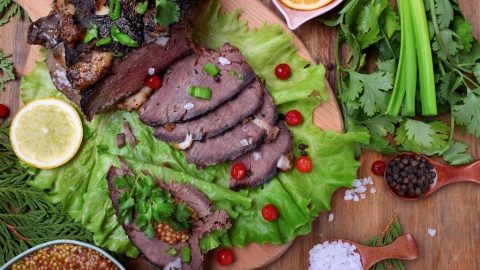
If you couldn’t tell, we’re big fans of elk meat here at Final Stalk. Why? Elk meat is tender, tastes subtly sweet yet savory, and has just the right amount of earthy flavor.
This flavor profile allows you to swap it into any of your favorite beef recipes with no drop-off in flavor while boosting the nutritional qualities of your meal. Those turned off by gamey flavors may be tempted to stay away from elk, but farm-raised elk meat is barely gamey compared to moose or deer.
Plus, elk meat is nutrient-dense, low in calories, and high in protein, thiamine, phosphorus, zinc, and selenium, among other nutrients. If you’re looking to introduce humanely raised, healthy, and flavorful meats to your meals, give it a shot.
In the Dark Brown Corner: Moose

What Do Moose Look Like?
The darker of the two beasts, moose, range from chocolate brown to black. A surefire way to know what animal you’re looking at stems from their antlers. A moose’s antlers are more rounded and flat than an elk’s.
Further, moose are simply massive. Some weigh up to 1,500 pounds and can stand up to seven feet at the shoulder. They’re also known to be much more aggressive in temperament than elk, though they’re primarily peaceful if left alone.
Where Moose Can Be Found
Compared with elk, moose can live further north in terms of latitude. You’ll find them in Alaska, Canada, Siberia, and some of the colder regions in the US, including the Rocky Mountains, Minnesota, Wisconsin, and the upper peninsula of Michigan.
Moose are not as widespread as elk and are much harder to find due to their remote habitats.
A Moose’s Typical Diet
Much like deer, moose are picky eaters and regularly browse their habitat for the types of food they like. They are not grazers like elk, who periodically eat mouthfuls of grass, so they scour their habit for fresh tree shoots and foibles (weeds). They also love to eat aquatic plants at the bottom of once-frozen bodies of water.
What Does Moose Meat Taste Like?
Much like any wild game, the taste of the meat depends on what the animal eats. Due to their richer diet, moose generally have a reasonably gamey taste, more so than elk but less than deer.
In terms of game meat, moose is flavorful, tender, and palatable. However, it’s not sold commercially, so you must obtain a hunting license and kill your own moose to experience what it tastes like.
If you want to try out game meat for the first time, we recommend elk, which is far easier to find and more palatable than moose. Farm-raised elk — wild elk can’t be legally sold — are grown and harvested in large open-pasture pens, where their controlled diet dials back their gaminess in the best way possible.
Elk vs Moose: Final Thoughts
Hopefully, by now you have a better understanding of the differences between elk vs moose – their habitats, diets, and ultimately how they taste.
Check out one of our highly-recommended suppliers to try elk meat for yourself. You won’t be disappointed.








Leave a Reply